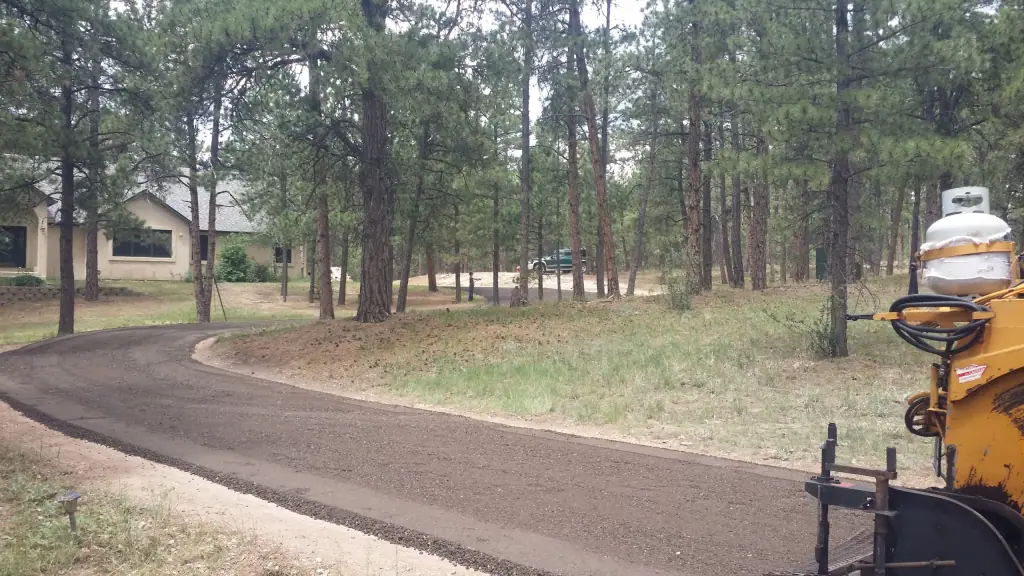
In Palmer Lake, the point where a driveway meets the road is one of the most heavily used paved surfaces on your property. This page covers asphalt apron installation in Palmer Lake, CO: what the work involves, who typically needs it, and when to schedule. Residential homeowners, acreage owners, and HOA managers all rely on this service. A licensed asphalt contractor can assess your property and get work on the calendar.
Licensed & Insured in Colorado • Free On-Site Estimates • Workmanship Warranty • Locally Owned, Front Range
Signs Your Driveway Apron in Palmer Lake Needs Replacement
Palmer Lake’s elevation means freeze-thaw cycles are a significant factor in pavement wear, and apron edges are particularly vulnerable to that stress. It builds quietly — and by the time it’s obvious, you’re often looking at street-permit territory and a bigger bill. Catching it early is almost always worth it.
Watch for these warning signs at your curb line:
- Cracked or crumbling lip where the apron meets the street
- Heaving or raised pavement near the curb
- Water pooling at the base of the apron after rain or snowmelt
- Loose gravel appearing at the pavement-to-street transition
If you notice any of these on your lakeside street or neighborhood driveway, it’s time to have a contractor take a look. We’d rather you call before it gets to the point where the street edge is involved.
How to Decide Between Apron Repair and Full Apron Replacement
Choosing the right scope on the first call saves homeowners and HOA decision-makers from paying twice. Repair works in some situations. Full replacement is the better call in others — and honestly, we’ve seen plenty of aprons where patching would’ve just been throwing money at something that was done.
A contractor looks at four things to make that call: how much asphalt is still structurally sound, whether the base material underneath is stable or compromised, how old the apron is, and how often it’s been patched before. Older aprons often have compounding issues beneath the surface that you can’t see from the top. Frequent past patches usually signal a base problem, not a surface one.
Work that touches the public street edge will likely need a permit from the town or county. A licensed contractor can tell you what’s required and handle that process on your behalf.
Site Preparation Steps Before Asphalt Apron Installation in Palmer Lake
Proper base preparation is one of the most important factors in how long an asphalt apron holds up. Acreage owners converting gravel approaches to paved aprons benefit from getting this stage right — this is where the job is really won or lost.
Palmer Lake’s soil conditions mean the subgrade must be properly prepared before asphalt is placed. Our crew follows a specific sequence before any hot-mix goes down:
- Remove old material: broken asphalt, gravel, or deteriorated base
- Grade the subgrade to establish correct slope and drainage
- Compact a base aggregate layer to create a stable, even foundation
- Install edge forms to hold the asphalt shape during placement
- Apply a tack coat, a bonding layer that helps the asphalt adhere to the base — a step the Federal Highway Administration covers in its asphalt pavement construction guidance
Skipping or rushing any of these steps can lead to early apron failure. That’s not a scare tactic — it’s just what we see when the prep work gets cut short.
What Happens During the Asphalt Apron Installation Process
First-time paving customers in Palmer Lake often want to know what to expect on installation day. Knowing the sequence helps you plan property access and avoid day-of surprises.
Palmer Lake’s relatively short warm season means late spring and early fall tend to offer reliable conditions for this work. Ground temperatures need to support proper asphalt compaction, so scheduling early in the season keeps your options open if weather causes a delay.
Here’s what installation day looks like:
- Equipment and crew arrive; the base compaction is checked before any asphalt is ordered
- Hot-mix asphalt is delivered and placed while still at working temperature
- The crew lays and levels the mix across the apron area
- A roller makes multiple passes to compact the asphalt to the correct density
- The surface cools and sets before any vehicle access is allowed
Inspecting a Newly Installed Apron to Confirm Quality
Property managers and HOA boards accepting contractor work on community driveways should walk through a simple checklist before signing off. A quick post-install review protects the property owner and confirms the work meets standard.
When work touches the public right-of-way, local code can require a final inspection before the job is considered closed. Confirm requirements with your contractor before work begins — not after.
Before approving the work, check that the apron edge meets the road surface without a lip or gap, that compaction is uniform with no soft spots or uneven texture, that water has nowhere to collect on the finished surface, and that edges run straight and consistent along the full width.
Seasonal Maintenance That Keeps Your Palmer Lake Apron in Good Shape
A well-installed asphalt apron still needs attention through the seasons to reach its full service life. Palmer Lake homeowners and acreage owners who follow a simple maintenance routine get more years out of the pavement before replacement becomes necessary.
Winter road treatment — salt and sand — can accelerate wear on apron edges over time. Each spring, clear the sand and debris left behind and inspect for new cracks. Each fall before ground freeze, seal any cracks that have opened up. On a multi-year cycle, apply a seal coat to protect the surface from UV and moisture. Walking the apron edge once a year to check for heaving or separation at the curb line takes five minutes and can save you a much bigger repair down the road.
Staying ahead of small cracks keeps water out of the base. That’s where real apron damage begins — and once it’s in the base, you’re not patching your way out of it.
Frequently Asked Questions
Do I need a permit for asphalt apron installation in Palmer Lake CO?
Work that touches the public right-of-way will likely need a permit from the town or county. A licensed asphalt contractor can tell you exactly what’s required and handle that process as part of the project. Confirm the specific requirements with your contractor before work begins — it’s not paperwork you want to sort out after the fact.
How long does a new asphalt apron last in Palmer Lake’s climate?
A properly installed asphalt apron can hold up through many Colorado freeze-thaw seasons when base preparation and crack sealing are done correctly. Local soil conditions and base depth are what we watch most closely — those two factors drive service life more than anything else. Fall crack sealing every year adds real time before you’re looking at replacement.
What time of year is best to install an asphalt apron in Palmer Lake CO?
Late spring through early fall generally offers the best conditions for asphalt apron installation in Palmer Lake, CO, because ground temperatures support proper compaction during that window. Palmer Lake’s warm season is relatively short compared to lower-elevation areas. Scheduling early in the season gives you more flexibility if weather causes a delay — and up here, weather delays are a real possibility.
Can an asphalt apron be installed on a gravel or dirt approach in Palmer Lake?
An asphalt apron can be installed on a gravel or dirt approach. The crew grades and compacts a base layer first before any asphalt is placed. This type of conversion is common for acreage properties moving from gravel to a paved apron. The base work is what makes the finished surface stable on those types of approaches — don’t let anyone skip it.
How do I know if my apron needs replacement or just a patch?
A contractor determines whether an apron needs replacement or repair by assessing base integrity and remaining surface depth. Widespread cracking or heaving across the apron usually means the base is involved and full replacement is the right call. Isolated surface cracks with a solid base underneath can often be patched instead. It’s a judgment call, and we’ll tell you honestly which way we think it goes.
How soon can vehicles use the apron after installation in Palmer Lake?
Vehicles can generally use a newly installed asphalt apron once the asphalt has fully cooled and set. Palmer Lake’s cooler spring and fall temperatures can influence cure time, so follow the guidance your contractor provides based on that day’s conditions and the mix used.