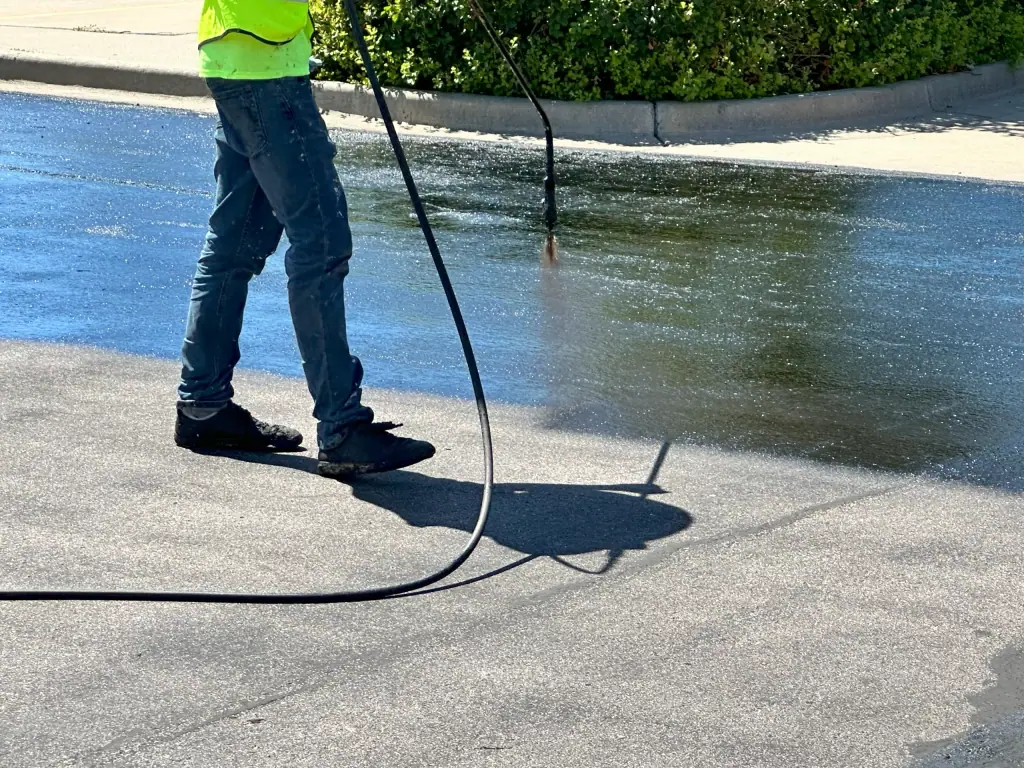
In Palmer Lake, freeze-thaw cycles split asphalt fast — crack sealing slows that damage before it spreads. Paul’s Asphalt Service LLC provides asphalt crack sealing in Palmer Lake CO for driveways, parking lots, and private roads. We serve residential and commercial properties — contact us to schedule. Professional crack sealing extends pavement life and protects your asphalt investment.
Licensed & Insured in Colorado • Free On-Site Estimates • Workmanship Warranty • Locally Owned, Front Range
How to Spot Cracks That Need Sealing on Your Palmer Lake Pavement
Palmer Lake sits at 7,000 feet elevation, and that altitude drives rapid freeze-thaw cycles that split asphalt sooner than lower-elevation areas. Cracks that look minor in autumn can widen significantly by spring — we see it every year. Catching them early keeps repair costs low and prevents cracks from opening into potholes.
Four crack types show up on pavement out here: hairline cracks, which are thin surface lines and usually the first sign your asphalt is aging; linear cracks that run along or across the pavement, common on driveways; edge cracks along the outer border of a driveway or parking lot; and alligator cracking, the pattern of interconnected breaks that looks like reptile skin. Each one tells us something different about what’s going on underneath.
You can check for these yourself with a simple walk-through. Look for any line wide enough to catch a coin edge. Start at the perimeter of your driveway — edge cracks show up early and are easy to walk right past. Watch for any area where the surface looks uneven or sunken, too.
HOA managers in Palmer Lake should walk paved surfaces after each winter season. That’s when freeze-thaw damage shows up most clearly, and finding cracks at that stage means sealing is still the right fix. Waiting longer risks base damage that sealing alone can’t correct.
When Crack Sealing Is the Right Fix — Not Full Repaving
Crack sealing is the right repair when your pavement base is still structurally sound and cracking hasn’t spread across most of the surface. Choosing the correct repair saves money and extends the years you get from your existing pavement — and honestly, we’d rather help you seal now than repave something that didn’t need it.
Sealing makes sense when cracks are narrower than about three-quarters of an inch, cracking covers less than a third of the total surface, the pavement doesn’t flex or sink when driven on, and the base underneath feels firm rather than soft or unstable. Those four things together tell us the structure is still doing its job.
Repaving becomes necessary when the base has failed. Pavement that sinks under vehicle weight, large areas of alligator cracking, or edges that have completely broken away — those are base failure signs. At that point, sealant applied over the surface won’t hold, and we’ll tell you that straight rather than take your money on a repair that’s going to fail inside a season.
Many driveways and HOA roads in Palmer Lake have sound bases. Decades of UV exposure and freeze-thaw cycles cause surface cracking, but the structural layer below can stay intact — and in those cases, sealing now extends the pavement’s useful life by years. If the pavement still carries load without flexing and cracks are isolated, seal now. If cracking is widespread and the surface moves underfoot, plan for resurfacing instead of spending on a repair that won’t last.
How Palmer Lake’s Climate Affects the Best Time to Seal Asphalt Cracks
Palmer Lake’s late spring through early fall is the right window for asphalt crack sealing — and staying inside that window makes a real difference in how long the repair holds. At 7,000 feet, temperatures drop fast, and sealant applied in cold or wet conditions won’t bond correctly. That’s not a technicality; it’s the difference between a repair that lasts and one that fails before the next thaw.
The temperature minimum for crack filler to cure properly is 50°F, and the pavement surface must be dry — a standard application requirement consistent with Federal Highway Administration pavement preservation guidance. In Palmer Lake, mornings can stay cool well into June, so afternoon scheduling often produces better conditions than early-morning work.
Snowmelt is one of the fastest ways existing cracks grow wider. Water from spring snowpack works into open cracks, freezes overnight, and expands the gap from the inside. Sealing before the first hard freeze in fall cuts off that cycle before winter begins.
Late spring is workable once nighttime lows hold above 50°F. Summer gives us the most reliable conditions — warm pavement helps sealant flow and bond properly. Early fall is still viable, but we need to get on the schedule before the first frost hits. Winter is out entirely; cold surfaces prevent proper adhesion and cure, no exceptions. Property owners on rural roads outside Palmer Lake who wait too long often find cracks have grown through winter. Getting on the schedule before September keeps your pavement protected through the full freeze cycle.
The Crack Sealing Process Used on Palmer Lake Driveways and Parking Lots
Paul’s Asphalt Service LLC follows a thorough process on Palmer Lake driveways and parking lots we seal, and knowing what each step involves helps you plan around the work.
Cleaning the crack is the most important step. Dirt, loose asphalt, and debris inside the crack prevent sealant from bonding to the crack walls. We clear each crack using compressed air, wire brushing, or both, depending on what the crack contains. Rural driveways surrounded by trees or unpaved shoulders often collect pine needles, gravel, and organic material inside cracks — that material holds moisture and it has to come out before any sealant goes in, so extra clearing time is normal for properties in those conditions.
Once the crack is clean, we apply either hot-pour or cold-pour sealant depending on crack width, depth, and current conditions. Hot-pour sealant — a heated rubberized material — goes directly into the crack and bonds tightly to the crack walls as it cools. Cold-pour products work for smaller hairline cracks and apply without heating equipment. After application, the sealant needs time to cure before traffic returns. Cure time depends on the product used and the air temperature at the time of application — keep vehicles and foot traffic off sealed areas until cure is complete. We’ll give you the specific window based on the product and conditions on the day of the job.
What to Expect After Asphalt Crack Sealing in Palmer Lake
After asphalt crack sealing is complete on your Palmer Lake property, the most immediate result is that water can no longer enter the crack and reach the base below. Blocking that water intrusion is what slows pavement deterioration — once you’ve cut off the water, you’ve stopped the clock on the damage cycle that leads to potholes and base failure.
Sealed cracks remain visible. The sealant fills and covers the crack, but it doesn’t disappear into the surface. On older pavement, the sealed line will be darker than the surrounding asphalt. That appearance is normal and expected — it’s not a sign anything went wrong. The sealed surface also needs to cure before vehicles or foot traffic return — we can confirm that window based on the product and conditions used on the day of the job.
Crack sealing and seal coating work well as a pair. Sealing fills the openings; seal coat applied over the top adds a protective layer that slows UV damage and moisture absorption. At Palmer Lake’s elevation, UV exposure ages asphalt faster than at lower elevations, so sealed cracks hold longer when a seal coat follows.
Crack sealing doesn’t restore pavement to new condition. It stops active damage, extends pavement life, and buys time before larger repairs are needed — and when you catch it at the right stage, it’s the most cost-effective repair you can make.
Keeping Palmer Lake Pavement Crack-Free — Ongoing Maintenance Tips
Long-term pavement health in Palmer Lake depends on regular inspection and acting on small problems before they grow. A consistent maintenance schedule cuts major repair costs over the life of your driveway, parking lot, or HOA road — and it’s less effort than most people expect.
Walk your paved surfaces twice a year — once in late spring after snowmelt and once in early fall before freeze season. These two windows show you the most damage. Look for new cracks, widening in existing cracks, and any soft or sunken areas. For HOA boards, pairing that walk-through with seal coat planning makes the most of the visit: seal cracks first, then apply seal coat over the surface, and your pavement gets the best protection through Palmer Lake’s harsh winter and high-altitude summers.
Your spring check should cover all paved edges for new cracking after winter, any area where crack width has increased since last season, locations of alligator cracking that may need evaluation beyond sealing, and debris cleared from crack openings so you can see their full length and width. Get sealing scheduled promptly once temperatures hold above 50°F.
Crack sealant doesn’t last forever. Traffic volume, UV exposure, and temperature cycles all affect how long a repair stays effective. Palmer Lake’s elevation speeds UV degradation, so checking sealed areas every year is worthwhile — re-seal when you see deterioration starting rather than waiting for cracks to reopen fully. Our team is also able to do pavement rejuvenation if needed.
Seal the Crack — Call Today
Fill and seal cracks now so water cannot get in and freeze. Call now for a free crack sealing estimate. This service is part of our Asphalt Sealcoating & Maintenance in Palmer Lake — see the full lineup there. Call (719) 232-1523 for a free on-site estimate, or reach out online and we will get back to you fast.
Frequently Asked Questions
How do I know if my Palmer Lake driveway needs crack sealing or full repaving?
Your Palmer Lake driveway needs crack sealing — not repaving — when the base is solid and cracks are narrow and limited in coverage. If the pavement doesn’t flex or sink under vehicle weight and cracking covers less than a third of the surface, sealing is the right repair. Repaving becomes necessary when the base has failed, the surface moves underfoot, or alligator cracking spreads across most of the pavement. When you’re not sure, call us before you decide — we’d rather look at it than have you spend money on the wrong repair.
What time of year is best to schedule asphalt crack sealing in Palmer Lake CO?
Late spring through early fall is the best time to schedule asphalt crack sealing in Palmer Lake CO, with surface temperatures above 50°F and dry pavement required for sealant to bond correctly. Palmer Lake’s high elevation means morning temperatures can stay cold well into June, so afternoon scheduling often works better early in the season. Don’t schedule after the first fall frost arrives — cold surfaces prevent proper adhesion and the repair won’t hold through winter.
How long does asphalt crack sealing take on a typical Palmer Lake driveway?
Completion time for crack sealing depends on the size of the driveway and the total footage of cracks present. Larger parking lots or HOA roads take longer. Driveways near wooded areas — where pine needles and gravel can fill cracks — may need extra cleaning time before sealant goes in.
Can asphalt crack sealing be done on parking lots in Palmer Lake commercial areas?
Asphalt crack sealing works on commercial parking lots and HOA roads in Palmer Lake, not just residential driveways. The same process — cleaning, debris removal, and sealant application — applies to any paved surface with cracks that haven’t yet caused base failure. Parking lots with high traffic volume benefit from crack sealing because water intrusion under heavy loads accelerates base damage faster than on residential surfaces.
How soon can I use my driveway after asphalt crack sealing in Palmer Lake?
Cure time after asphalt crack sealing depends on the sealant product used and the air temperature at the time of application. We’ll give you the specific guidance based on the product and conditions on the day of the job rather than a general estimate. Cooler temperatures at Palmer Lake’s elevation can extend cure time compared to lower-elevation jobs using the same product.
Does asphalt crack sealing in Palmer Lake CO also stop potholes from forming?
Asphalt crack sealing in Palmer Lake CO helps prevent potholes by blocking water from entering cracks and weakening the base below the pavement surface. Once water reaches the base, freeze-thaw cycles break the base apart from the inside — and a weakened base is what allows potholes to form under vehicle weight. Sealing cracks before that base damage occurs is the most effective and lowest-cost way to stop potholes before they develop.