Palmer Lake’s freeze-thaw cycles put significant stress on asphalt surfaces — a pattern well-documented by the Federal Highway Administration’s pavement preservation program. This page covers asphalt driveway sealcoating in Palmer Lake, including timing, prep work, and what the job involves from start to finish. Sealcoating is the maintenance layer of our full asphalt driveway services in Palmer Lake — it protects a fresh asphalt driveway resurfacing and adds years before a surface ever needs asphalt driveway replacement. We serve homeowners, HOA properties, and rural acreage driveways throughout the area. Contact us to get your driveway protected before the next hard winter hits.
How to Tell Your Palmer Lake Driveway Needs Sealcoating Now
Your driveway gives clear signals when protective sealcoat has worn away and surface damage is building. Faded gray color, small surface cracks, rough texture. Those are the first things to look for. Water pooling on the surface or soaking straight in means the asphalt binder has broken down. At that point you’re not just looking at a cosmetic issue.
High-altitude communities like Palmer Lake get UV exposure that can accelerate asphalt fading faster than homeowners expect. We walk the full driveway and flag any areas that need driveway crack sealing before sealcoating begins, because sealing over hidden damage just locks the problem in.
What Sealcoating Does to Your Asphalt Driveway Surface
Sealcoating applies a thin protective layer directly over your existing asphalt surface. That layer blocks water, UV rays, and vehicle fluids from breaking down the pavement underneath. Palmer Lake’s seasonal snow and winter conditions make that waterproof barrier especially valuable for driveways that take a full winter beating, including a newly completed asphalt driveway installation.
Sealcoating does not fill deep cracks or fix structural failures. Any underlying damage needs a proper asphalt driveway repair before sealing begins. We’d rather tell you that upfront than seal over a problem that’s going to cost you more later. That’s just how the material works.
How Palmer Lake Contractors Prepare a Driveway Before Sealcoating
Proper preparation determines how well a sealcoat holds over time. Our crew cleans the entire surface by blowing out debris, treating oil spots, and trimming back edge vegetation that would interfere with coverage. All cracks wider than a hairline get filled with crack filler and allowed to fully cure before any sealcoat goes down. Skip that step and the sealcoat won’t bond the way it should.
The surface must be completely dry before application begins, so we check Palmer Lake weather windows carefully. Afternoon mountain thunderstorms are common in summer and can delay both prep and application by a day or more. Woodmoor HOA property managers and detail-focused homeowners should build that buffer into any scheduling plan.
The Sealcoating Application Process Step by Step
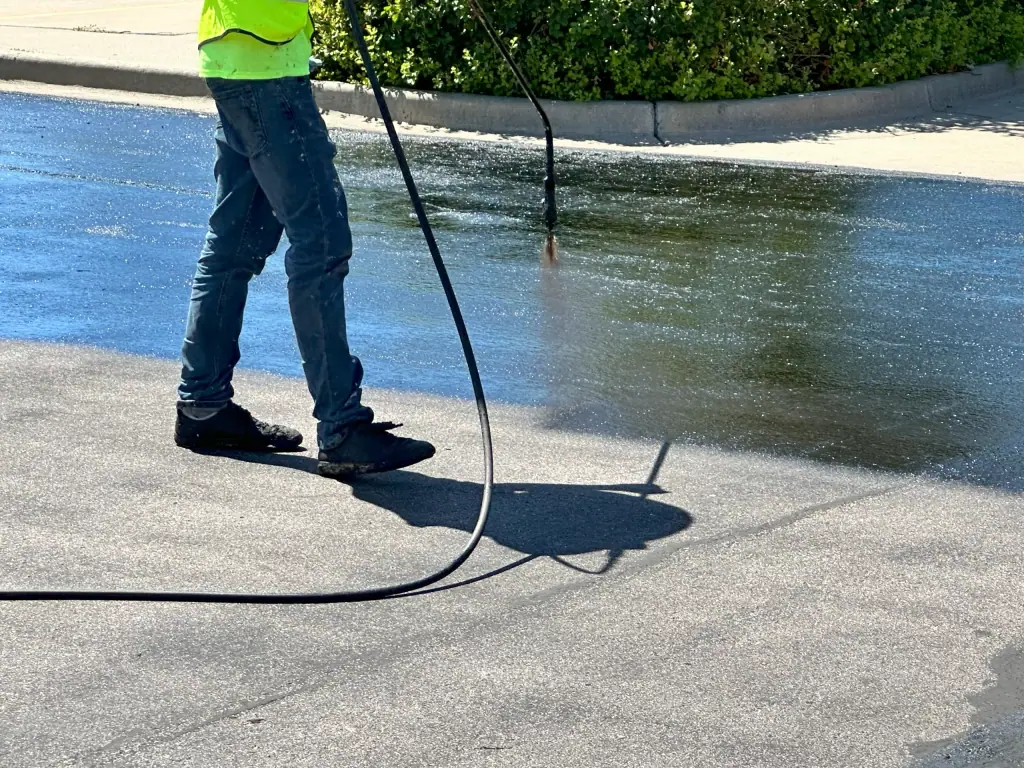
On application day, we choose the right tool for your driveway. Squeegee, brush, or spray application each suit different driveway sizes and conditions, including the longer runs found on rural acreage properties in the area. Multiple coats go down with each one allowed to dry completely before the next. That’s standard practice in the trade, not a step we skip to move faster.
After the final coat, your driveway stays closed to foot and vehicle traffic for 24 to 48 hours. Cold overnight temperatures in spring and fall can slow curing, so we’ll give you a realistic timeline based on the forecast before we pack up.
How to Verify the Sealcoating Job Is Done Correctly
Knowing what a correctly finished sealcoat looks like before the crew leaves your property matters. Uniform dark color across the full surface, with no missed patches or thin streaks, signals solid coverage. Edges along garage slabs and driveway aprons should be clean, straight, and even.
After the sealcoat dries fully, no puddling or uneven thickness should be visible anywhere on the surface. Pay close attention to shaded or north-facing edges of your driveway. Those spots can trap moisture and hide thin application areas that need a touch-up, and they’re easy to overlook until next spring.
How Often Palmer Lake Driveways Should Be Sealcoated
Most driveways need sealcoating every two to three years to stay protected. Heavy use, steep grades, or full sun exposure can shorten that interval closer to two years. Driveways with more shade cover or lighter daily traffic can often stretch to the three-year mark.
Palmer Lake’s winters and spring snowmelt cycles wear surfaces faster than lower-elevation communities see. The homeowners who fare best set a regular schedule and don’t wait for visible damage to show up again. A consistent interval keeps repair costs low and extends driveway life, and it’s almost always cheaper than letting things go.
Frequently Asked Questions
When is the best time of year to sealcoat a driveway in Palmer Lake?
Late spring through early fall is the best window for sealcoating a driveway in Palmer Lake, when temperatures stay above 50 degrees Fahrenheit and no rain is in the forecast. Avoid scheduling from late October through early April, when frost risk makes proper curing unreliable. We review the extended forecast before confirming your application date, because one overnight freeze can undo a job that looked fine when we left.
Can a Palmer Lake driveway be sealcoated if it already has cracks?
A Palmer Lake driveway with cracks must have those cracks filled and fully cured before sealcoating begins. Applying sealcoat over open cracks traps moisture inside, which accelerates damage rather than stopping it. We assess crack depth during the site visit and schedule crack repair as its own step before any sealing work is booked. That sequence isn’t optional.
How long should I stay off my driveway after sealcoating in Palmer Lake?
Foot traffic is safe after 24 hours, and vehicle traffic should wait a minimum of 48 hours after sealcoating in Palmer Lake. Cool overnight temperatures in spring and fall can slow curing beyond that standard window. Your contractor will let you know if conditions on your specific job day call for additional wait time.
Does sealcoating work on a long rural driveway or acreage road near Palmer Lake?
Sealcoating works on long rural driveways and acreage roads near Palmer Lake, with the contractor adjusting the application method to suit the longer run. We review base condition and drainage first on rural El Paso County properties, since poor drainage or a failing base changes what work is needed before sealing makes sense. Longer driveways may require spray application to cover the full surface evenly.
How do I know if my driveway needs sealcoating or full replacement?
Sealcoating is appropriate for asphalt that is structurally sound and showing surface-level wear, not base-level failure. Widespread alligator cracking across large sections or a soft, spongy base means replacement is needed before sealing provides any benefit. We inspect the full driveway and give you a clear recommendation based on what the surface actually shows. Sometimes a targeted repair is the right call, and sometimes the driveway has simply run its course.
Can Palmer Lake HOA parking areas and private roads be sealcoated the same way as driveways?
HOA parking areas and private roads in Palmer Lake can be sealcoated using the same process applied at a larger scale. Woodmoor and Gleneagle HOAs are examples of community associations in the area that manage paved surfaces that may benefit from regular sealcoating maintenance. Commercial-scale sealcoating uses the same materials and prep standards as residential work, with application methods scaled to cover larger surface areas efficiently.