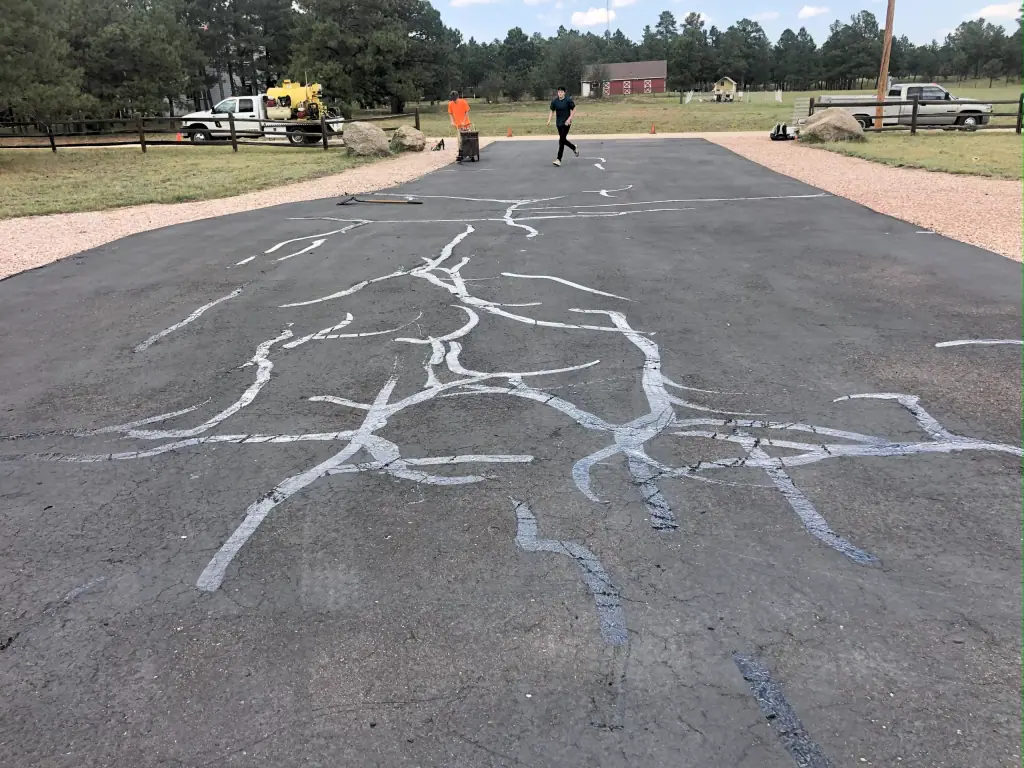
Asphalt in Palmer Lake takes a beating from freeze-thaw cycles every season. Paul's Asphalt Service LLC. handles asphalt maintenance repair in Palmer Lake, CO for driveways, parking lots, private roads, and acreage pads. This page walks you through what to expect and how to book a local asphalt contractor. As a primary asphalt contractor, we are built for this exact work.
How to spot asphalt damage before it gets worse in Palmer Lake
Catching asphalt damage early costs far less than a full replacement later. Palmer Lake sits near 7,000 ft elevation, and freeze-thaw cycles crack asphalt faster here than in lower Colorado cities — a pavement distress pattern documented by the Federal Highway Administration's Pavement program.
Four signs are worth knowing:
- Alligator cracking (a web of interconnected cracks across the surface)
- Edge crumbling along driveways or lot borders
- Pooling water that doesn't drain after rain
- Surface raveling, where the top layer loosens and scatters
That last one is easy to miss until you're sweeping gravel off what used to be a solid surface. Shaded, moisture-heavy lots common in the Palmer Lake area can speed up surface damage, so if yours fits that description, don't wait for obvious cracks before getting eyes on it.
Choosing the right asphalt repair method for your Palmer Lake property
Matching the repair method to the depth of damage saves money and extends pavement life. El Paso County soil expansion affects base stability, so any repair choice has to account for sub-base condition first.
Crack sealing works for hairline and narrow surface cracks before water gets in. Infrared patching, a heat-based method that bonds new material to old, suits potholes and localized failures. Mill-and-overlay, which means grinding down the surface and laying fresh asphalt, fits widespread surface failure across a larger area. Pick the wrong method for the damage depth and you get repeat failures. That's the part that costs people the most over time, and we've watched it happen more than once. A proper assessment of base condition is what drives the right call, and we won't skip it.
Site preparation steps every asphalt repair job needs in Palmer Lake
Proper site preparation prevents new repairs from failing within one winter cycle. Rural acreage owners and property managers often skip prep steps, and that's where early failures begin.
Preparation covers four areas:
- Clearing debris and vegetation from the repair zone
- Saw-cutting damaged sections cleanly so edges are sharp and stable
- Checking base compaction before any material goes down
- Addressing drainage issues that caused or worsened the original damage
Some lots in the Palmer Lake area have soft clay sub-base beneath the asphalt. On those lots, grading and base work aren't optional. They're what holds the repair through Palmer Lake winters. We'd rather take the extra time up front than get called back six months later.
What happens during an asphalt maintenance repair service in Palmer Lake
An asphalt maintenance repair job in Palmer Lake follows a set sequence from assessment through cure. Knowing each step reduces scheduling surprises for first-time repair customers.
The process runs in this order:
- Surface assessment to confirm damage type and depth
- Saw-cut or mill removal of failing asphalt
- Tack coat application (a bonding layer sprayed on before new asphalt is placed)
- Hot-mix or infrared asphalt placement
- Compaction with a roller to lock material in place
- Cure time before the surface opens to traffic
Palmer Lake's afternoon temperatures and UV intensity affect how fast asphalt cures. Scheduling around optimal temperature windows helps achieve the best compaction and bond. Rush that step and you'll feel it by spring.
How to verify your asphalt repair was done correctly
A finished asphalt repair should meet clear visual and functional standards. Knowing what correct work looks like protects you as a property owner and helps you catch problems before they grow.
Four things to look for after any repair:
- Smooth, flush edges where new asphalt meets old material
- Uniform surface texture without low or high spots
- No areas holding standing water after rain
- Clean compaction lines with no loose material at the seams
In Palmer Lake, inspect repairs after the first hard freeze. Thermal stress from freezing temperatures reveals weak seams quickly, and catching a bad bond early is far easier than repairing a failure that opens further over winter. If something looks off, call before it gets worse.
A seasonal asphalt maintenance plan keeps Palmer Lake pavement lasting longer
Scheduled asphalt maintenance extends pavement life by years and cuts long-term repair costs. Palmer Lake's frequent freeze-thaw cycles mean annual maintenance matters for pavement that's meant to last.
Here's how a practical cycle runs: in spring, once snowmelt clears, you're looking for new cracking, heaving, or drainage problems that opened over winter. Summer is when you seal open cracks while the weather is dry and warm, before moisture finds its way in. Fall is the time for seal coat, a protective surface treatment applied before the first freeze hits. Over winter, you document anything new and flag it for spring. That's the whole plan.
Woodmoor HOA boards and property managers benefit most from a recurring schedule. Planning ahead avoids the larger repairs that follow one or two neglected seasons. We see the difference every spring between properties that stayed on a cycle and those that didn't.
Frequently Asked Questions
When is the best time of year to schedule asphalt repairs in Palmer Lake?
Late spring through early fall is the best window for scheduling asphalt repairs in Palmer Lake, because soil must be dry and air temperatures must stay above 50°F for proper compaction and cure. Palmer Lake's warm window is shorter than Front Range cities at lower elevation. Scheduling early in the season gives our crews the most flexibility and avoids the hard deadline of the first fall freeze. Don't wait until September and hope for good weather.
How long does an asphalt patch repair take to cure before I can drive on it?
A standard hot-mix asphalt patch typically takes 24 to 48 hours to cure before vehicle traffic is safe. In Palmer Lake's cooler mountain temperatures, cure times often run toward the longer end of that range. Cooler overnight temps slow the process, so plan for the full 48 hours before putting weight on a fresh patch. We know that's inconvenient, but cutting it short costs you more in the long run.
Can asphalt cracks in my Palmer Lake driveway be repaired without replacing the whole surface?
Hairline and moderate cracks in a Palmer Lake driveway can be sealed or patched without replacing the full surface. Full replacement is only needed when base failure has occurred or when alligator cracking covers a large area and the sub-base can no longer support the surface. Most driveways with isolated cracking qualify for a targeted repair rather than a complete tearout, and that's what we'll tell you honestly when we come out to look.
Do HOA roads and parking lots in the Woodmoor area qualify for the same repair services as residential driveways?
Woodmoor area HOA roads and parking lots qualify for the same asphalt maintenance repair services as residential driveways, scaled to larger surface areas and higher traffic loads. Crack sealing, infrared patching, and mill-and-overlay all apply to commercial and HOA surfaces. The methods are the same. Scope and sequencing adjust for the size and use of the pavement.
How often should a Palmer Lake property owner schedule asphalt maintenance?
Palmer Lake property owners should schedule an asphalt inspection annually, crack sealing every one to two years, and seal coating every three to five years depending on traffic volume and sun exposure. Higher traffic and more direct sun at Palmer Lake's elevation accelerate surface wear. Sticking to that cycle keeps small maintenance costs from growing into large repair bills. We've watched properties go both ways, and the ones on a schedule are a lot cheaper to maintain over time.
What causes asphalt to crack so fast on rural Palmer Lake driveways and acreage roads?
Rural Palmer Lake driveways and acreage roads crack faster because of a combination of freeze-thaw cycles, clay sub-base expansion, high UV exposure at elevation, and heavy vehicle loads. Each factor weakens asphalt on its own, and they often work together on mountain-area properties. Addressing sub-base conditions and keeping cracks sealed are the two most effective ways to slow that breakdown. We've seen what happens when both get ignored for a few seasons, and it's a much bigger conversation.