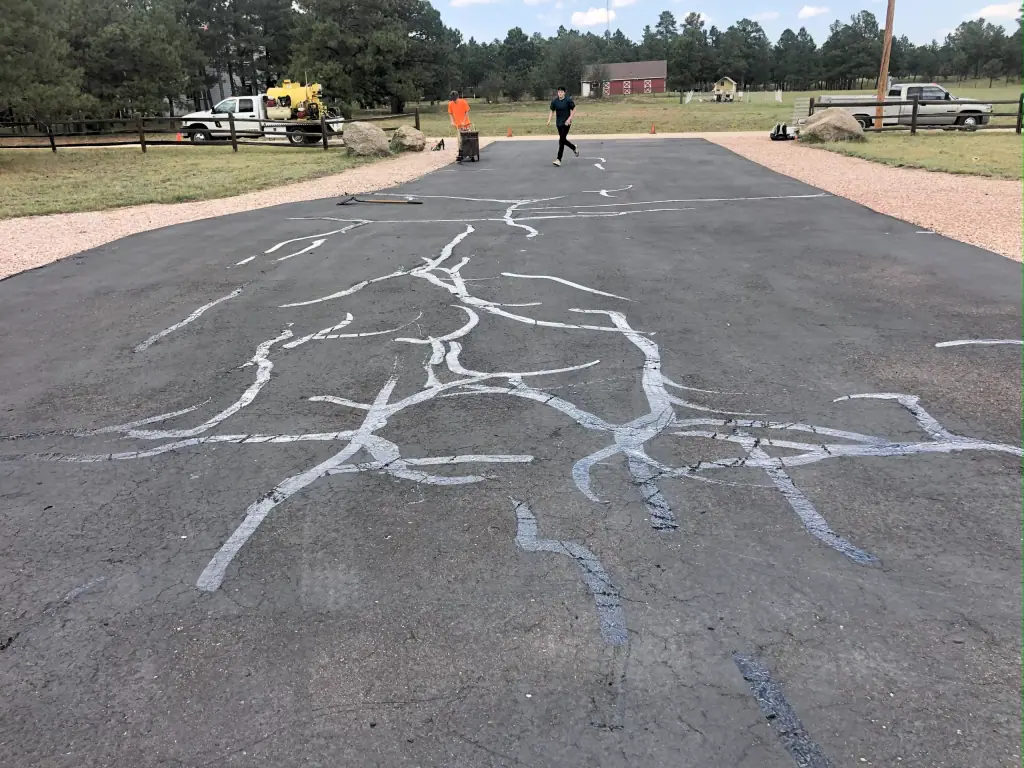
Palmer Lake asphalt takes a hard beating from freeze-thaw cycles and heavy snowmelt each year. This page covers asphalt restoration in Palmer Lake, CO, including crack repair, resurfacing, and surface renewal for driveways, parking lots, and private roads. As an asphalt contractor, restoration is a core service we handle from the first inspection through final cure. Here’s what the process looks like and how to get on our schedule.
How to Spot Asphalt Damage That Needs Restoration in Palmer Lake
Catching asphalt damage early keeps small problems from becoming full-depth failures. In Palmer Lake, the elevation sits at 7,200 feet, and that height accelerates UV oxidation and freeze-thaw spalling faster than lower Colorado elevations. We see surfaces up here age noticeably quicker than comparable driveways down in the Springs.
Watch for these signs on your driveway, lot, or private road:
- Alligator cracking (a web-like pattern across the surface)
- Raveling (loose aggregate breaking away from the top layer)
- Edge crumbling along the pavement border
- Soft spots that flex or sink underfoot
Any one of those is reason enough to call us before the damage reaches the base. Once it gets down there, you’re in a different conversation entirely — and a more expensive one.
When Restoration Is the Right Fix Instead of Full Replacement
Asphalt restoration saves time and disruption when the base layer is still structurally sound. Property owners in Woodmoor and downtown Palmer Lake often face this decision and want a clear answer before spending money on a full tear-out. Honestly, so do we, nobody wants to sell you a replacement when a restoration will do the job.
A contractor checks three things to make that call: pavement thickness, base integrity, and surface age. When the base holds firm, restoration addresses the surface problems without removing what’s still working below. Sometimes that’s the right call. Sometimes the base has just had it, and throwing money at the surface won’t change that. The inspection is what tells us which situation you’re actually in.
Surface Preparation Steps Before Asphalt Restoration Work Begins
Proper surface preparation is what allows a restored asphalt layer to bond and hold for years. Acreage owners and HOA decision-makers in Palmer Lake often ask about this step because skipping it is exactly where restoration jobs fall apart. We’d rather spend the extra time on prep than get a callback six months later.
The preparation sequence follows this order:
- Clear all debris, pine needles, and road sand from the surface
- Route existing cracks to create clean edges for filler
- Patch potholes and depressed areas flush with the surrounding surface
- Trim and clean pavement edges before any overlay or resurfacing begins
A surface that isn’t fully clean won’t accept a bonded overlay. Simple as that.
The Asphalt Restoration Process, What Happens on Your Property
Asphalt restoration follows a defined sequence, and knowing that sequence means no surprises on job day. We work with homeowners and HOA managers across Palmer Lake who want a clear picture before we arrive.
Depending on surface condition, the job may involve several methods. Crack filling with hot-applied filler stops water intrusion. Infrared repair reheats and recompacts failing sections without leaving a cold seam. A thin overlay bonds over a prepared existing surface, and slurry seal restores texture while slowing oxidation. Not every driveway needs all four. The inspection tells us which methods apply to your surface.
Palmer Lake’s afternoon thunderstorms are common during summer months and can shut down the cure window if work runs late into the day. That’s not a minor inconvenience, it can undo what we just did. So we schedule work to start early in the morning to stay ahead of that.
How to Confirm Asphalt Restoration Was Done Correctly
A post-job walkthrough tells you whether the restoration was completed correctly. Property managers and homeowners in Palmer Lake should know what a quality finish looks like before the crew leaves the site. You shouldn’t have to take our word for it.
Look at the seams first. There should be no visible ridges or gaps where the old and new surfaces meet. Color should be consistent across the restored area with no skipped patches. Run your eye along the surface pitch too, because water needs to sheet off toward the correct drainage path, not pool in the low spots. The compacted surface should be flat, not rippled from the roller.
Palmer Lake’s sloped lots and lakeside drainage routes make pitch especially important up here. If water pools on the restored surface after a rain, that’s a drainage problem that needs to be corrected before it causes further damage.
Seasonal Maintenance After Asphalt Restoration in Palmer Lake
Annual crack sealing and seal coat application after restoration extend pavement life well beyond what an untreated surface delivers. Homeowners and HOA managers in Monument and Woodmoor planning long-term upkeep should build this into a regular schedule. At this elevation, skipping a season catches up with you faster than you’d expect.
Colorado’s warm season for pavement work is short. According to FHWA pavement preservation guidance, seal coat needs overnight temperatures above 50°F to cure and adhere properly. In Palmer Lake, the first freeze can arrive in late September, which means sealing work must finish before consistent overnight lows drop below that threshold. Late spring through early September is the reliable window. If you’re planning maintenance for this year, get on the schedule early rather than waiting to see how the fall shapes up. We fill up fast once the season opens.
Frequently Asked Questions
How do I know if my Palmer Lake driveway needs restoration or full replacement?
Your Palmer Lake driveway likely needs restoration rather than replacement when the base layer is solid and existing cracks are surface-level rather than structural. A base that flexes, sinks, or shows heaving points to deeper failure that restoration alone won’t fix. We can tell you which situation you’re in after a look at the driveway, no guessing, no commitment required.
What time of year is best to schedule asphalt restoration in Palmer Lake?
Late spring through early September is the best window for asphalt restoration in Palmer Lake, because overnight temperatures must stay above 50°F for proper cure and adhesion. Palmer Lake’s first freeze can come as early as late September, which closes the reliable working season quickly. Getting on the schedule earlier in the season gives the restored surface a better chance to cure fully before cold weather arrives.
Can asphalt restoration fix the alligator cracking in my Woodmoor parking lot?
Asphalt restoration can address alligator cracking in a Woodmoor parking lot when the base beneath the cracked surface is still structurally sound. Surface-level alligator cracking with a firm base responds well to infrared repair or a bonded overlay that knits the area back together. When the base itself is failing, restoration isn’t enough and more involved base repair work is needed first.
How long does an asphalt restoration job take on a Palmer Lake residential driveway?
The timeline for a residential driveway restoration depends on the driveway size, the restoration method used, and weather conditions on the day of the job. Your contractor can give you a specific time estimate after reviewing the scope of work. Larger HOA lots or private roads with more square footage typically require additional days to complete.
Does Palmer Lake’s altitude or climate affect how asphalt restoration holds up?
Palmer Lake’s altitude, high UV exposure, thin air, and hard winter freezes cause asphalt to oxidize and crack faster than it does at lower Colorado elevations. Restored surfaces hold up longer when seal coat is applied on a regular schedule after the initial restoration is complete. Getting to the surface before it shows significant oxidation is the most effective way to offset what this climate does to pavement.
Can a gravel driveway on rural Palmer Lake acreage be converted and then restored later?
A gravel driveway on rural Palmer Lake acreage can be converted to asphalt through a process that includes base preparation and full paving. Once the driveway is paved, the surface enters a normal maintenance cycle that includes crack sealing, seal coating, and restoration as needed over time. The long-term upkeep of a converted driveway is the same as any asphalt surface in Palmer Lake.