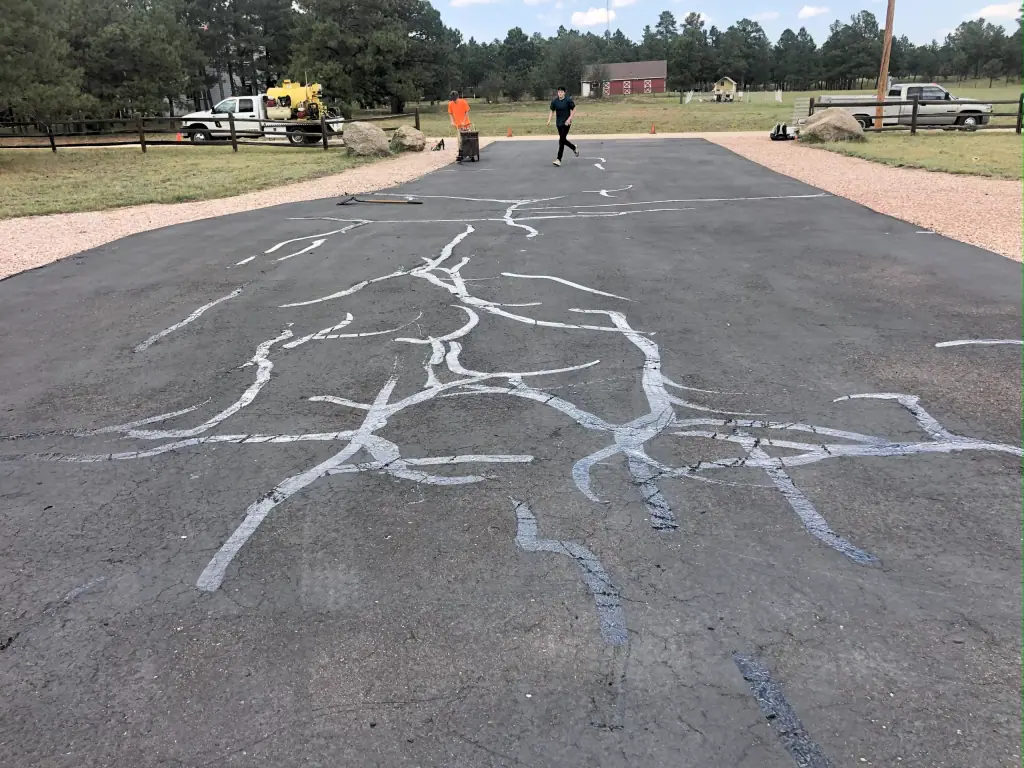
Palmer Lake’s heavy snow and freeze-thaw cycles crack and heave asphalt every winter. Paul’s Asphalt Service LLC handles asphalt snow damage repair in Palmer Lake CO, covering cracks, potholes, frost heaves, and surface spalling. Hiring a qualified contractor restores safe, solid pavement before damage has a chance to spread.
How to Spot Snow Damage on Your Palmer Lake Asphalt
Palmer Lake homeowners and property managers can catch pavement problems early by doing one walk-around after snowmelt clears. You’re looking for edge cracking along the outer border, alligator cracking where the surface has broken into a web of connected pieces, frost heaves where sections have lifted or buckled, surface spalling where the top layer is flaking or pitted, and sunken low spots where the pavement has settled unevenly.
Palmer Lake sits near 7,200 feet in elevation. Freeze-thaw cycles hit pavement harder here than at lower elevations — we see it every spring without fail. While you’re out there, note any standing water. Pooling signals base damage beneath the surface, and that’s the part you don’t want to ignore.
Why Palmer Lake’s Climate Breaks Down Asphalt Faster Than Most Cities
Palmer Lake’s high elevation produces significantly more freeze-thaw cycles per year than lower-elevation Colorado cities. Water enters existing cracks, freezes, expands, and forces those cracks wider with each cycle — a deterioration mechanism documented by the Federal Highway Administration’s pavement program. At this elevation that’s not a slow process — it’s aggressive, and it compounds quickly.
Snowplow activity on Palmer Lake streets adds surface scraping stress to pavement that’s already under freeze-thaw pressure. Elevation-driven soil movement during frost heave compounds the problem. HOA roads in the area face the same stresses as private driveways. The cause and the solution are the same at every level.
Choosing the Right Repair Type for Your Asphalt Snow Damage
Matching the repair to the actual damage type saves time and avoids over-spending on Palmer Lake driveways and parking areas. An asphalt contractor inspection confirms which option fits your pavement before any work begins.
Crack sealing works best for narrow cracks under ½ inch wide when the base is still sound. Pothole patching is right for localized failures where the surrounding base holds firm. When surface damage is widespread but the base layer is intact, resurfacing is the correct call. Full-depth repair or replacement is needed when frost heave has broken through and damaged the base itself. No surface-level repair will hold when the foundation has moved — we’ve seen people try to patch their way out of a base problem, and it doesn’t end well.
What Happens During an Asphalt Snow Damage Repair in Palmer Lake
First-time repair customers in Palmer Lake often want to know what the process looks like before work starts. A qualified asphalt contractor typically follows a clear sequence on snow damage repairs:
- Clean the damaged area — remove debris, standing water, and loose asphalt fragments so the repair surface is stable
- Cut or route cracks — routing opens a clean, uniform channel that gives the filler a strong bonding edge
- Apply crack filler or tack coat — the right material depends on the repair type; tack coat is a bonding liquid used before placing new asphalt
- Place and compact new asphalt — hot-mix asphalt is preferred for lasting repairs; cold-patch is used when conditions require it
- Check grade and drainage — the repaired area must shed water away from the patch, not hold it
Properties in areas with significant mountain runoff may need extra base grading to protect the pavement foundation. Up here, that’s just what the terrain demands.
Verifying Your Repair Held After a Palmer Lake Winter
Palmer Lake homeowners and property managers should walk repaired areas each spring after snowmelt clears. You’re checking for new edge separation along the border of the patched area, soft spots underfoot that suggest the base shifted again, re-cracking along the repair seam, and water pooling on or near the patch. Pooling means a grade problem has developed — don’t let it sit another season. Contact your asphalt contractor if any section shows movement or heaving after the ground thaws.
Preventing Future Snow Damage on Palmer Lake Asphalt
Proactive maintenance extends pavement life and lowers long-term repair costs for Palmer Lake homeowners and HOA managers. Seal coat applied periodically blocks water from entering the pavement surface, and a qualified contractor can advise on the right interval for your pavement’s condition. Fill small cracks before winter arrives — even hairline ones. Water infiltration starts early, and those tiny cracks are where it gets in. Switching to rubber-blade snowplows on residential asphalt reduces surface scraping, and keeping drainage channels clear stops meltwater from pooling and refreezing on the pavement.
Late spring and summer are the best windows for repairs in Palmer Lake. Warmer temperatures allow asphalt to cure properly. Cold or wet ground causes repairs to fail faster, and then you’re paying twice. HOA communities benefit from scheduling regular crack inspections across shared roads so elevation-driven damage gets caught before it spreads from one section to the next.
Frequently Asked Questions
When is the best time to schedule asphalt snow damage repair in Palmer Lake?
Late spring through early fall is the best time to schedule asphalt snow damage repair in Palmer Lake, because soil is stable, temperatures are warm, and asphalt cures correctly in those conditions. Repairs placed over frozen or wet ground fail faster and may need to be redone — honestly, we’d rather you call us in June than ask us to patch something in March that won’t hold. Booking during the warm months also gives us time to properly assess the base before placing new material.
Can a cracked Palmer Lake driveway be patched, or does the whole surface need replacing?
Whether a cracked Palmer Lake driveway can be patched or needs full replacement depends on the condition of the base layer beneath the surface. Cracks with a solid base underneath can be sealed, patched, or resurfaced without a full tearout. When frost heave has damaged the base itself, full-depth repair or replacement is the only option that holds long-term. Sometimes a repair is the right call, and sometimes it’s throwing money at something that’s done — that’s why we look at the base first.
How soon after winter should I have my Palmer Lake asphalt inspected for snow damage?
Palmer Lake asphalt should be inspected for snow damage after snowmelt clears each spring. Getting out there early means you can book repairs before the warm-season schedule fills up, and damage isn’t sitting unaddressed through the thaw period. At 7,200 feet, that extra stress on already weakened pavement adds up faster than most people expect.
Does freeze-thaw damage in Palmer Lake affect asphalt differently than in warmer Colorado cities?
Yes. Palmer Lake’s higher elevation produces more freeze-thaw cycles per year than lower-elevation Colorado cities, which causes faster crack expansion and more frequent frost heave. Each freeze cycle forces water deeper into existing cracks and widens them. Property owners at this elevation see pavement deteriorate more quickly than owners at lower elevations, even when the original pavement quality is the same.
What asphalt damage types does snow and ice cause in the Palmer Lake area?
Snow and ice in the Palmer Lake area commonly cause edge cracking, alligator cracking, frost heaves, surface spalling, and pothole formation. All of these damage types are driven by water infiltration into the pavement followed by repeated freezing and expanding. Each type signals a different stage of failure, which is why identifying the correct damage type before repair matters.
Can an HOA or property manager in Palmer Lake schedule asphalt snow damage repair for multiple areas at once?
Yes. An asphalt contractor can assess and repair multiple driveways, parking areas, or private roads across a Palmer Lake HOA community. Coordinating repairs across several areas in a single project is more efficient than scheduling each location separately — one assessment, one schedule, one point of contact. Communities with multiple shared roads benefit from this approach because it reduces total project time and keeps everything organized.