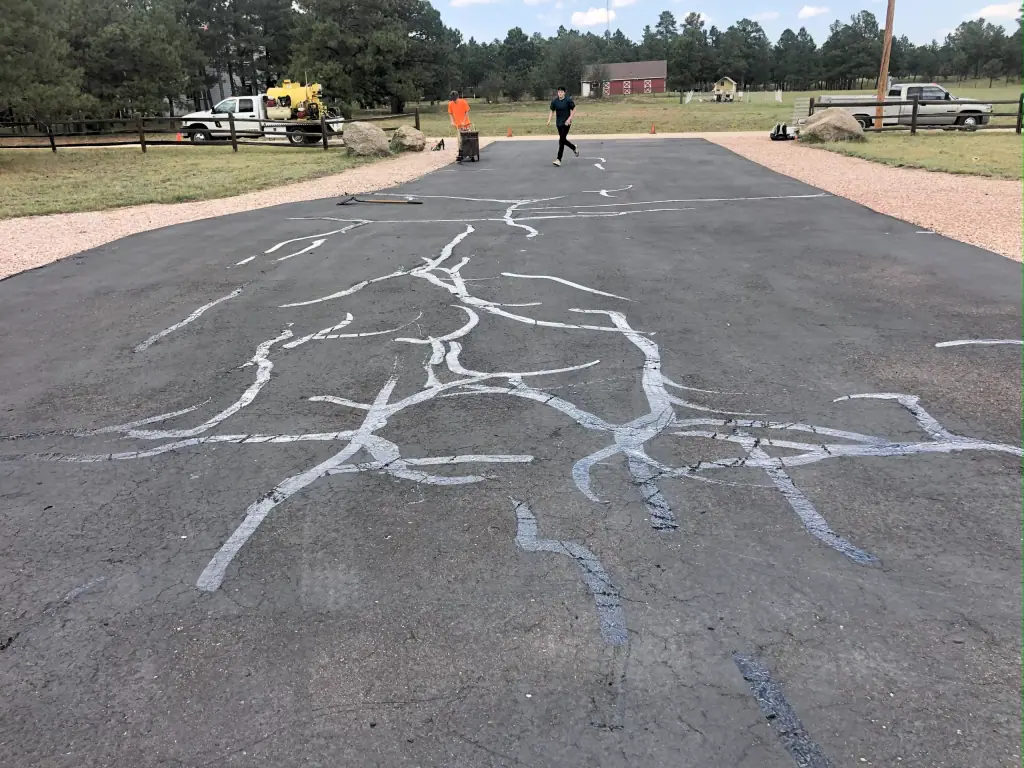
Palmer Lake’s freeze-thaw cycles and spring snowmelt push water into asphalt quickly. This page covers asphalt water damage repair in Palmer Lake, Colorado, including driveways, parking lots, and private roads. We walk you through what to watch for, what the repair process looks like, and how to get started. Our team our local asphalt contractors familiar with El Paso County conditions and handles all of this work directly.
How to spot water damage on Palmer Lake asphalt
Catching water damage early stops small cracks from turning into full-depth pavement failures. After wet seasons, homeowners and property managers should look for these warning signs:
- Alligator cracking (a pattern of interlocking cracks across the surface)
- Soft or spongy spots underfoot or under tire
- Edge crumbling along driveways or lot borders
- Standing water that pools and does not drain after rain
Palmer Lake sits at roughly 7,000 feet in elevation. Spring snowmelt saturates base layers fast at that altitude, faster than most people expect the first time they see it. Properties near the lake and lower-lying areas of town are especially exposed to moisture runoff and can show these signs earlier than properties on higher or better-drained ground.
Why Palmer Lake weather speeds up asphalt water damage
Colorado’s climate produces frequent freeze-thaw cycles throughout the year, and each cycle cracks the asphalt binder and pushes out base material underneath. Once cracks open, the heavy spring rain that follows a hard winter freeze has a direct path into the base layer. Nothing left to stop it.
Rural Palmer Lake properties in lower-lying or heavily wooded areas face an added complication. Poor drainage and soft subgrades mean water doesn’t move away from pavement quickly. Owners in those areas tend to see damage appear faster than they expect, especially after back-to-back wet seasons. We see it every spring.
Diagnosing the right repair scope for your Palmer Lake asphalt
Correct diagnosis is what separates a repair that holds from one that fails again in two seasons. Proper scoping involves checking crack depth, base saturation, and total surface area affected.
Surface-only damage, such as shallow cracks without base movement, can be addressed with crack fill or a skin patch. Areas where the base is saturated or displaced need full-depth remove-and-replace. Patching over a failed base will not hold. We’d rather tell you that upfront than have you call us back in two seasons.
HOA roads in the region are a common example where base assessment matters most. Clay-heavy soils in portions of the El Paso County area can hold moisture longer and weaken subgrade strength over time, so base conditions need to be confirmed before any repair scope goes to HOA decision-makers. That’s not a detail you want to skip when you’re getting board approval for a budget line.
The asphalt water damage repair process in Palmer Lake Co
Asphalt water damage repair in Palmer Lake, Co follows a clear sequence of steps, and knowing those steps helps you set realistic timeline expectations. Here is what happens on repair day:
- Remove damaged asphalt and saturated base material down to stable, dry subgrade
- Regrade and compact a dry aggregate base to restore proper load-bearing support
- Apply hot-mix asphalt in the correct lift thickness for the surface type and traffic load
- Compact the surface with a roller to achieve proper density and a solid bond
Palmer Lake’s warm season is short, and that part matters. Asphalt repairs need air and surface temperatures above 50°F to cure properly. Jobs should be planned around that window. Don’t wait until August and assume there’s plenty of time left in the season.
Preparing your property before asphalt water damage repair begins
Before we show up, there are a few things that will keep the job on schedule and protect the surfaces around the work zone. Clear all vehicles, debris, and landscaping from the repair area. If your property has irrigation systems running close to pavement edges, mark those lines before work begins so we don’t cut through them during excavation.
Check where your downspouts discharge, too. Redirecting them away from the work zone ahead of the job keeps the area drier and ready for base compaction. And if you have utility lines buried near your driveway or parking lot, get those marked before we arrive. Call 811 if you haven’t already — it’s the federally designated number to contact before any digging. We can’t dig until that’s done, and it holds up the whole job.
Preventing water damage from returning to Palmer Lake asphalt
Completed repairs last longer when you take a few steps to block water from re-entering the pavement. Seal coating the repaired surface closes surface pores and slows moisture entry. Ask us about the right timing for your specific surface condition. Each fall before freeze season, topping up crack fill keeps water from getting into existing cracks before temperatures drop. Regrading soil edges and extending downspouts away from pavement takes care of the rest.
Properties in the El Paso County area with clay-based soils can experience slow drainage that keeps pavement wetter for longer. Periodic inspections are the simplest thing you can do to stay ahead of it. Catching a new crack before it opens to the base layer costs far less than a full-depth repair, and in this climate the difference between the two can show up in a single winter.
Frequently asked questions
How do I know if my Palmer Lake driveway has water damage under the surface?
Soft or spongy spots when driven over, alligator cracking patterns, and water pooling after rain are the main signs of subsurface water damage in a Palmer Lake driveway. A contractor probes crack depth and tests surface give to confirm whether the base layer is saturated. Surface appearance alone doesn’t always show how far damage has spread below. Getting a depth check before committing to a repair scope gives you an accurate picture of what actually needs to be done.
Can asphalt water damage in Palmer Lake be patched, or does the whole section need replacement?
Surface cracks without base failure can be patched, but areas with saturated or displaced base material need full-depth remove-and-replace to hold long-term. Patching over a compromised base gives you a repair that breaks down again within one or two seasons. The right answer depends on crack depth and whether the aggregate base underneath is still firm and dry. We check both before we tell you what we recommend.
What time of year is best to schedule asphalt water damage repair in Palmer Lake Co?
Late spring through early fall is the best window for asphalt water damage repair in Palmer Lake, when daytime temperatures stay reliably above 50°F. Hot-mix asphalt needs enough heat to compact and cure correctly. Palmer Lake’s late-spring snowstorms can push usable working days later into May or June, and that’s not unusual up here. Booking early in the season gives the most scheduling flexibility before summer demand peaks.
Does freezing weather in Palmer Lake make asphalt water damage worse over time?
Freezing weather in Palmer Lake makes asphalt water damage worse with each passing winter because water inside cracks expands as it freezes and widens the crack on every cycle. Colorado’s frequent freeze-thaw pattern moves that along faster than most lower-elevation areas see. A crack that looks minor in October can open significantly by April. Getting cracks filled before freeze season is the most cost-effective way to slow that down.
How long does asphalt water damage repair take for a typical Palmer Lake driveway?
The time required for residential driveway repairs in Palmer Lake depends on the size of the area and the depth of base work required. After the new asphalt is placed and compacted, the surface typically needs 24 to 48 hours of cure and cool-down time before it handles full vehicle traffic. Cooler Palmer Lake temperatures in spring and fall can push that toward the longer end. We’ll tell you before we leave the job site exactly when it’s ready to drive on.
Will fixing drainage around my Palmer Lake property help my asphalt last longer?
Fixing drainage around a Palmer Lake property directly extends pavement life by reducing the amount of water that contacts the surface and base layers. Redirecting downspouts, regrading soil edges so water runs away from pavement, and keeping culverts clear all reduce standing moisture near the asphalt. Water is the primary cause of base saturation and freeze-thaw cracking in this area. Drainage corrections made after a repair protect what you spent and reduce how often you need to call us back.