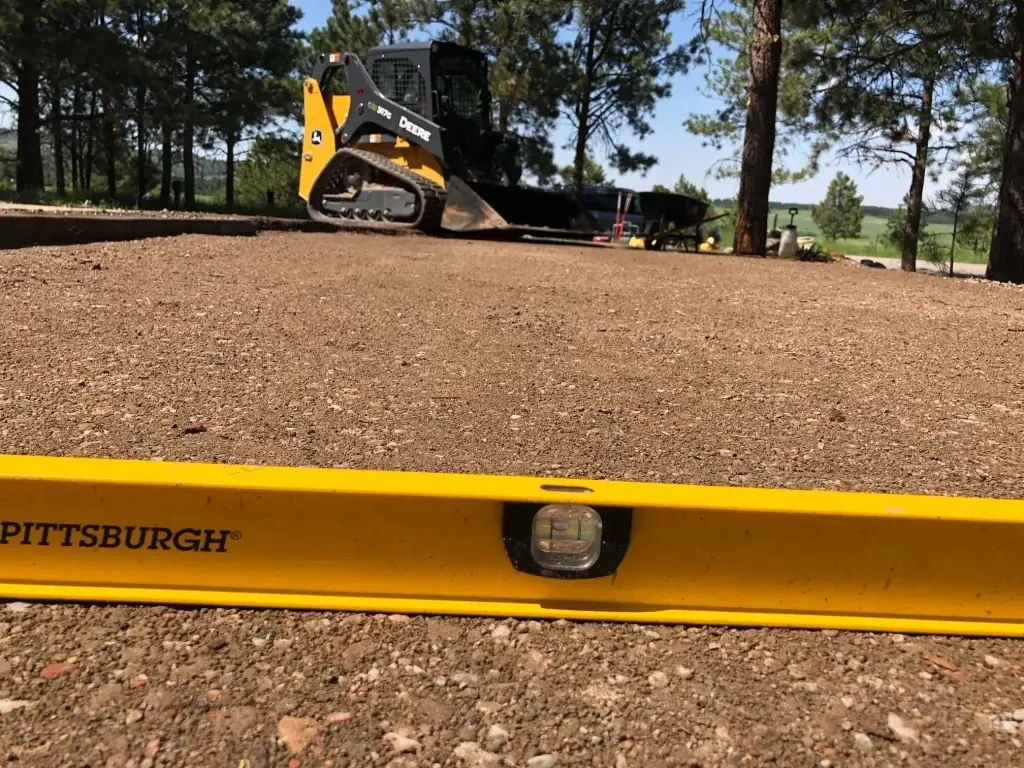
Yes, a gravel driveway on a Palmer Lake acreage lot can be converted to asphalt. Whether the existing gravel stays as the base or comes out depends on its condition. Firm, well drained gravel with a decent pitch can often be regraded, topped up and paved. Soft, rutted or muddy gravel usually has to be stripped and rebuilt first, or the new surface will crack over the same weak spots.
On a larger lot, drainage across uneven ground, the spot where your driveway meets a town or county road, and Colorado's short paving season all shape the plan. Paul's Asphalt checks the existing base on site and handles the whole conversion, from grading and drainage through base work and hot mix paving, as part of our asphalt driveway installation in Palmer Lake.
This article covers judging your gravel, the steps, cold weather limits, local rules and when to hire a crew.
Can I Pave Right Over the Gravel Driveway on My Palmer Lake Acreage Lot?
You can pave right over the gravel driveway on a Palmer Lake acreage lot only when that gravel already works as a real base: firm underfoot, free of mud and organic soil, and shaped so water runs off. Most older gravel drives land in one of three outcomes.
- Pave over. The gravel is solid and drains. The crew regrades the top, compacts it and paves.
- Add and compact base. The gravel is sound in most places but thin, loose or out of shape. New base rock goes on in layers and gets compacted before paving.
- Strip and rebuild. The gravel has sunk into soft soil or holds water. It comes out, the soil below is corrected, and a new base is built.
Each outcome costs more than the one before it, so find out which you have before you budget.
What does converting a gravel driveway to asphalt actually mean?
Converting a gravel driveway to asphalt means the gravel stops being the driving surface and becomes the foundation under it. A thin layer of hot mix asphalt carries the traffic; contractors commonly quote 2 to 3 inches of compacted asphalt for a residential driveway. If the gravel moves, the asphalt cracks with it.
How Do I Tell If My Existing Gravel Is Good Enough to Keep as the Base?
Your existing gravel is good enough to keep as the base when it stays firm under a loaded vehicle and sheds water after a storm. Walk the full length after a heavy rain and look for these warning signs:
- Soft or spongy spots that give under your boots or tires
- Ruts deeper than the gravel layer, showing dirt or clay at the bottom
- Puddles that sit for a day or more
- No crown or side slope, so water runs down the middle of the drive
| What you see | What it likely means | What the crew does |
|---|---|---|
| Firm surface, minor potholes, water drains off | Base is sound | Regrade, compact, pave over |
| Thin gravel, loose rounded stone, flat profile | Base is too thin or the wrong stone | Add crushed base rock in compacted layers, reshape, pave |
| Mud pumping up, deep ruts, standing water | Soft subgrade or poor drainage | Strip gravel, fix soil and drainage, rebuild base, pave |
| Roots, stumps or organic soil in the path | Material that will rot and settle | Dig out, backfill with base rock, compact, pave |
If you see one or two warning signs in short stretches, expect spot repairs plus added base. If soft spots or standing water run the length of the drive, plan on stripping and rebuilding, because asphalt laid over that ground will settle unevenly.
What Are the Steps to Turn a Gravel Driveway Into Asphalt in Palmer Lake, CO?
The steps to turn a gravel driveway into asphalt in Palmer Lake follow a set order, and a skipped step shows up later as cracks or low spots.
- Call for utility locates. Public lines get marked before any digging.
- Assess the gravel. The crew tests the drive and picks one of the three outcomes above.
- Strip or regrade. Bad material comes out; usable gravel gets reshaped to a crown or cross slope.
- Fix drainage. Low spots, ditches and any culvert where the drive crosses a swale get corrected so water leaves the driveway edges.
- Build the base in layers. Contractors commonly quote 4 to 6 inches of sub-base for car and SUV driveways and aim for at least 95 percent of maximum dry density when compacting.
- Apply tack coat where needed. A thin bonding coat helps the asphalt grip the surface below.
- Lay and roll the hot mix. The asphalt goes down hot and gets rolled before it cools.
- Let it cure. Keep heavy vehicles off for the first days; full curing takes much longer.
When in the Year Can a Palmer Lake Gravel Driveway Be Paved, and What Does the Cold Do to the Base?
A Palmer Lake gravel driveway can be paved when the air and the ground are warm enough for hot mix to compact before it cools. CDOT's highway paving spec is a useful yardstick for a private drive.
| Compacted layer thickness | Minimum temperature, top layer | Minimum temperature, lower layers |
|---|---|---|
| Under 1.5 inches | 60 F | 50 F |
| 1.5 to under 3 inches | 50 F | 40 F |
| 3 inches or more | 45 F | 35 F |
The CDOT construction specifications also require an unfrozen surface free of water, snow and ice, with air temperature taken in the shade. Thin driveway layers need the warmest conditions. Our article on the best time of year for asphalt driveway installation in Palmer Lake covers the calendar.
Ground conditions keep working on the base after paving. The Colorado Geological Survey calls expansive soil Colorado's most significant geologic hazard and lists cracked driveways among its damage. It says these clay soils can swell by 10 percent or more, and some by as much as 20 percent. Clay-rich soils are common along the Front Range, though only a soil test tells you what is under your lot. Either way, the fix is grading and drainage that keep water out of the base.
What Rules Apply When Paving a Gravel Driveway on a Palmer Lake Acreage Lot?
The rules that apply when paving a gravel driveway on a Palmer Lake acreage lot depend on where the work touches public land and how much ground it disturbs. Our article on whether you need a permit to install an asphalt driveway in Palmer Lake covers permits in depth.
- Town right of way. If the work digs into Town of Palmer Lake right of way, call Town Hall at 719-481-2953 before any digging starts. Ask whether a street cut permit applies and what it costs.
- County roads. Outside town limits, a driveway that meets a County road needs an Access Permit from El Paso County before you pave it, rebuild it or move a culvert. If the County road is gravel, the County says the paved driveway should stop before the driveway culvert and not run into the right of way. Ask before you build or pave an apron or culvert crossing, and apply through the County's online permit portal.
- Stormwater. If the conversion plus other site work will disturb an acre or more, ask El Paso County which erosion and stormwater permit applies.
- Fire access. On a long or steep drive, ask your fire district whether its access requirements apply before the final layout is set.
Do I need a utility locate before the grading starts?
You need a utility locate before the grading starts. Colorado law requires notice to Colorado 811 at least two full business days before excavation, not counting the day you call. The Colorado 811 homeowner page notes that private lines, such as a gas line to a shop or a sprinkler line, are the owner's job to mark, usually through a private locator at about $100 to $350. Call 811 or (800) 922-1987.
Is It Worth Hiring a Paving Contractor Near Palmer Lake, or Can I Convert the Gravel Myself?
Hiring a paving contractor near Palmer Lake is worth it for most gravel to asphalt conversions, because hot mix has to be delivered by truck, spread while hot and rolled with heavy equipment inside a narrow temperature window. A homeowner can regrade and add gravel. Paving is a different job.
| Option | What you get | Effort and risk | Best fit |
|---|---|---|---|
| Regrade and top dress gravel | Fresher gravel surface | Rented equipment, repeats every few years | Tight budget, no paving plans |
| Tar and chip over gravel | Sealed stone surface, often cheaper than asphalt | Rougher finish, poor for snow blowing | Rural drive where looks matter less |
| DIY base, then hire paving | Asphalt on a base you built | Compaction mistakes show up as cracks | Owners with equipment experience |
| Paul's Asphalt full conversion | Grading, drainage, base and hot mix paving from one crew | Free consultation, one schedule | Most acreage lots, slopes, soft spots |
If your lot has varying slope, hire a crew that grades and paves together so the pitch is set once. If you see drainage problems, the base work matters more than the asphalt and belongs with the crew that paves. If you have a deadline before cold weather, a contractor who answers fast keeps you inside the season.
Paul's Asphalt has served Palmer Lake and the surrounding communities for 10 years, holds an A+ BBB rating, and has 4.8 stars on 29 Google reviews. Paul works on the jobs himself, and reviewers describe a reply the next day and paving the day after. The crew also comes back to fix issues after the job. One customer wrote: "I had a difficult driveway to pave due to varying slope and Paul and his crew did a great job."
The Bottom Line
A gravel driveway on a Palmer Lake acreage lot can be converted to asphalt. The condition of the gravel decides whether it gets paved over, built up, or stripped and rebuilt. Plan drainage, locates, permits and timing before the hot mix arrives. Paul's Asphalt can look at your gravel, tell you which outcome you have, and do the grading, base and paving as one job. Call (719) 232-1523 for a free consultation, or learn more about our asphalt driveway installation in Palmer Lake.