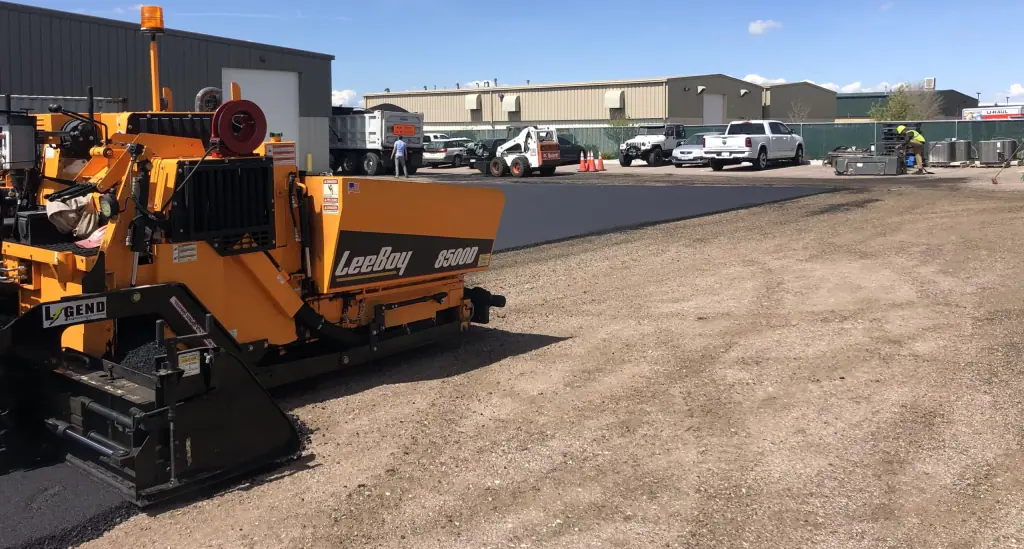
Palmer Lake weather is likely harder on hot mix asphalt than the weather in lower Colorado cities such as Colorado Springs and Denver. The main reason is height: the town sits at about 7,139 feet on the Palmer Divide, where winters are probably colder and snowier. No study has measured a faster wear rate for Palmer Lake pavement, though. How much damage you actually see depends on the build: the base under the asphalt, how water leaves the surface, and whether cracks get sealed before winter.
Built and maintained for this climate, a hot mix surface holds up well here. Paul's Asphalt has served Palmer Lake for 10 years from our address on Highway 105, and we plan our hot mix asphalt paving in Palmer Lake around these winters. Below you will find the climate numbers, what breaks asphalt down, the warning signs to watch for, and when to repair, seal or resurface.
How Palmer Lake Weather Compares With Colorado Springs and Denver for Hot Mix Asphalt
Palmer Lake weather is probably tougher on hot mix asphalt than Colorado Springs or Denver weather, because the town sits roughly 1,100 feet above Colorado Springs and nearly 1,900 feet above Denver. Palmer Lake has no published climate table of its own. Neighboring Monument, 157 feet lower, is the closest reference.
| Place | Elevation | Average annual snowfall | Record period |
|---|---|---|---|
| Palmer Lake | 7,139 ft | No published figure | None |
| Monument | 6,982 ft | 110.6 in | 1988 to 2003 |
| Colorado Springs | about 6,011 to 6,035 ft | 32.5 in | 1991 to 2020 |
| Denver | 5,280 ft | about 49.0 in | 1991 to 2020 |
These figures come from different stations and different years, so treat them as a general picture: more snow falls at this elevation. They do not measure how fast pavement wears out.
The same high ground runs across the area. Woodmoor sits at 7,294 feet, Black Forest at 7,369 feet and Gleneagle at 6,870 feet, and the Palmer Divide tops out near 7,700 feet at Vollmer Hill.
Is There Proof That Palmer Lake Asphalt Wears Out Faster?
There is no proof that Palmer Lake asphalt wears out faster, because no survey compares pavement life here with other Colorado towns. The forces at work are the same from Palmer Lake down the I-25 corridor to Colorado Springs. The City of Colorado Springs notes that freeze-thaw cycles are common along the Front Range and damage pavement over time. At Palmer Lake's height the cold season likely brings more snow, which gives a weak spot in the base more chances to fail.
What Freeze-Thaw Cycles Do to Hot Mix Asphalt in Palmer Lake
Freeze-thaw cycles break up hot mix asphalt in Palmer Lake by letting water into cracks, freezing it, and prying the pavement apart a little more each time. Colorado pavements typically go through 50 to 200 freeze-thaw cycles in an average year, according to a Colorado Department of Transportation research record.
The Colorado Department of Transportation explains that warm days and cold nights drive the cycle. Water seeps in, freezes, expands and cracks the pavement, and it can wash out the base below. Once the pavement or base can no longer carry traffic, potholes form.
Spring keeps the water coming. Monument's climate table shows about 22 inches of snow in March and again in April. A business lot along Highway 105 or a school lot in Lewis-Palmer School District 38 can look fine in October and show potholes by May. Heavy, frequent traffic does the rest once the cracks are open.
Why Does Moisture Damage Inside the Mix Get Worse Over Time?
Moisture damage inside hot mix gets worse over time because water weakens the bond that holds the mix together and softens the base under it, and every cycle adds to the last. A Colorado study notes that hydrated lime has proven successful in limiting moisture damage, which shows how much the mix design itself matters.
On a private road in Woodmoor or a long driveway in Black Forest, the stretch that holds water usually fails first. Drainage and base depth keep water out, and they also set how long the surface lasts. Our article on how long asphalt paving lasts in Palmer Lake covers lifespan in more detail.
How Sun, Heat and Temperature Swings Age Palmer Lake Asphalt
Sun, heat and temperature swings do age Palmer Lake asphalt. Sunlight and oxygen dry out the binder that holds the stone together. The surface fades to gray and turns brittle, and brittle asphalt cracks more easily when it freezes. In summer heat, a soft surface can rut under heavy loads.
The swings are wide. In Monument, the average January high is 41.2°F and the average low is 15.8°F, while the average July high reaches 81.5°F. Your pavement expands and shrinks through that whole range every year.
Shade shifts where the damage shows up. A driveway under the ponderosa pine around Black Forest, or on a wooded lot near Pike National Forest, gets less sun but can hold snow and ice longer. A driveway in open sun in Monument dries quickly and oxidizes faster. Sealcoating slows the sun damage; good drainage handles the meltwater.
Signs of Weather Damage on Palmer Lake Asphalt
The signs of weather damage on Palmer Lake asphalt show up first at cracks, edges and low spots. Walk your driveway or lot each fall and again after the spring thaw, and look for:
- Cracks wider than a quarter inch, which should be filled before the first freeze
- A gray, faded surface that feels rough or loose underfoot
- Crumbling or broken edges, often where the asphalt meets gravel or soil
- Low spots and puddles that still hold water a day after a storm
- Potholes or spider web cracking that appear in spring
- Gouges and scraped strips left by snow plows
These signs look the same on a driveway in Gleneagle, a private road in Woodmoor or a home in Chaparral Hills, where our reviews mention past work. Caught early, they often need only a crack repair or a patch.
When Palmer Lake Property Owners Should Repair, Seal or Resurface
Palmer Lake property owners should patch spring damage once it warms, seal in summer, fill cracks before the first freeze, and resurface in early fall. Colorado Springs, about 1,100 feet lower, averages its first fall freeze around October 2 and its last spring freeze around May 6. At Palmer Lake's higher elevation, expect the freeze season to be at least that long. Paving season is winding down well before the Star of Palmer Lake is lit on Sundance Mountain in December.
| Season | Job | Why it matters | Timing note |
|---|---|---|---|
| Late spring | Pothole repair and patching | Fixes damage the thaw exposed | Hot patch is the lasting repair once it warms up |
| Summer | Sealcoating | Slows sun and water damage | Nights generally need to stay above 50°F to cure |
| Late summer to early fall | Crack filling | Keeps water out of the base all winter | Fill cracks over a quarter inch before the first freeze |
| Early fall | Resurfacing | Restores worn, faded surfaces | A fresh layer before winter means fewer cracks in spring |
| Winter | Emergency repairs | Keeps a failed spot safe until spring | Temporary repairs now, lasting repairs when it warms |
If you see open cracks in September, then book Paul's Asphalt for crack filling before the deep freeze. If your surface is gray and brittle across the board, then ask us about resurfacing in early fall. If a pothole opens on a business lot along Highway 105 in January, then call our 24-hour line for an emergency repair. If the same low spot fails every spring, then the base or drainage needs work, and we can rebuild it.
Why Hire Paul's Asphalt for Weather-Resistant Hot Mix Paving in Palmer Lake
Paul's Asphalt is a good fit for weather-resistant hot mix paving in Palmer Lake because we handle every part of the job that decides how a surface holds up in winter. That covers grading and prep, gravel base installation, water drainage and hot mix paving, plus the upkeep that follows: crack filling, sealcoating, chip sealing, patching and resurfacing.
A weather-ready job with us follows these steps:
- We look at the site during a free consultation.
- We grade the ground and build the gravel base the site needs.
- We set drainage so meltwater leaves the surface.
- We pave with hot mix asphalt.
- We keep it sealed and crack-free with an ongoing maintenance program.
Paul works on jobs himself. Reviewers describe a reply the next day and paving the day after. We take on difficult sites, including varying slopes and long rural driveways like those in Black Forest, and we come back to fix issues after the job. We hold an A+ BBB rating and 4.8 stars on Google, and we serve Palmer Lake, Monument, Gleneagle and the surrounding area.
The Bottom Line
Palmer Lake's elevation likely brings a snowier, colder winter than Colorado Springs or Denver, so hot mix asphalt here faces more freeze-thaw stress. That does not mean it has to fail sooner. A solid base, good drainage, crack filling before the first freeze and regular sealcoating keep a driveway, lot or private road in good shape through these winters. Paul and his crew build and maintain hot mix asphalt for exactly these conditions. Call Paul's Asphalt at (719) 232-1523 for a free consultation on hot mix asphalt paving in Palmer Lake.
Providing Asphalt Contractor Services to Palmer Lake and the Greater Colorado Springs Area
Request a Quote