Yes, it is possible to apply a new layer of asphalt over an existing asphalt driveway. This process is called an asphalt overlay or resurfacing. The new layer is typically 1.5 to 2 inches thick and bonds to the old surface using a tack coat, a liquid adhesive applied before paving begins. For an overlay to work, the existing driveway must have a structurally sound base with no deep cracking, soft spots, or drainage failure underneath. Driveways with only surface wear, minor cracking, or fading are good candidates. Driveways with alligator cracking or base failure need full replacement instead. In Palmer Lake, CO, a proper base inspection before any overlay work is especially important because of frequent freeze-thaw cycles at higher elevation. Overlay costs less than full replacement, but the condition of the base determines whether it's the right option.
What is asphalt overlay and how does it work?
Asphalt overlay is the process of paving a fresh layer of hot-mix asphalt directly over an existing paved surface. The old driveway stays in place, which removes the need for a full tear-out. You get a new smooth surface on top without the cost and labor of starting from scratch.
Overlay is a widely used resurfacing method in the asphalt industry, and we use it often. It only works when the old surface and the base material beneath it are still structurally stable. When the base has shifted or weakened, overlay can't fix the problem. It just covers it up, and that's a problem you'll pay for twice.
What is a tack coat and why does it matter?
A tack coat is a thin layer of liquid asphalt emulsion sprayed onto the existing surface before the new asphalt goes down. It's the bonding agent between the old layer and the new one, and without it, the two layers can separate over time. When that happens the new surface slides, cracks, or starts peeling away from the old one underneath. A properly applied tack coat is what turns two separate asphalt layers into one bonded, durable surface. Skipping this step, or applying it unevenly, is one of the most common reasons overlays fail early. That's not a corner worth cutting.
When can you apply a new layer over an existing asphalt driveway?
You can overlay an existing asphalt driveway when the base is firm, drainage is correct, and surface damage is only shallow. The damage doesn't need to be zero. Some wear and minor cracking is expected on any older driveway. What matters is whether the problem is at the surface or deeper in the base.
Good overlay candidates have surface cracks less than a quarter inch wide with no movement or shifting in the base below. Driveways that are simply faded, slightly cracked, or worn smooth on top fall into this category. Rutting and depressions shallower than one inch can often be leveled with a base course before the overlay goes down.
The driveway edges must be solid enough to hold the added height of a new layer. Soft or crumbling edges may need repair before paving begins.
What checks should be done before scheduling an overlay?
Before scheduling an overlay, a contractor should verify four things on-site:
- Firm base: press or probe the surface for soft spots that flex or sink under pressure. A solid base doesn't move.
- No standing water: walk the driveway after rain and look for areas where water pools rather than drains away.
- Edge integrity: check that the outer edges aren't crumbling, cracked deeply, or undermined by soil erosion.
- Surface crack width: cracks wider than a quarter inch, or cracks forming a connected pattern, suggest the problem goes deeper than the surface.
All four checks help decide whether overlay is the right choice or whether full replacement is needed. We won't know for certain until we see it in person, and that's honest.
What conditions disqualify a driveway from overlay?
A driveway can't be overlaid when the base beneath the asphalt has failed, shifted, or become waterlogged. Overlay adds a new surface. It doesn't repair what's underneath, and covering a damaged base only delays a larger, more expensive problem.
Alligator cracking is the most important disqualifying sign to recognize. It's a pattern of interlocked cracks that looks like reptile skin, and it signals that the base has lost its load-bearing ability. Applying a new layer over alligator cracking won't stop the cracking from spreading up through the new asphalt in short order. We've seen it happen, and it's a waste of everyone's money.
What is alligator cracking and why does it matter?
According to the FHWA Distress Identification Manual for Long-Term Pavement Performance, alligator cracking forms when the base or sub-base beneath the asphalt is no longer strong enough to support traffic loads. Water gets into the base, the base softens, and the asphalt above it flexes until it breaks apart in that connected crack pattern. The cracking starts below the surface and works its way up, which is why covering it with a new layer doesn't solve anything. Base failure is the primary reason overlays fail prematurely.
Three clear signs that a driveway needs full replacement instead of overlay:
- Alligator cracking across a large area. Base failure is present and can't be fixed from the top down.
- Potholes that go all the way through the asphalt. The sub-base is broken and must be rebuilt before any new paving is possible.
- Standing water that doesn't drain. Poor drainage will cause any new layer to fail quickly, especially through Palmer Lake's freeze-thaw cycles.
In Palmer Lake and other mountain-area properties, freeze-thaw cycles accelerate base damage each winter. That's not a slow process up here. Early inspection each spring catches problems before they grow. Adding a second overlay on top of a previous overlay is also generally not recommended because the combined height creates clearance problems at garage doors, curbs, and property edges.
How thick should a new asphalt layer be for a driveway overlay?
A residential driveway overlay should be at least 1.5 to 2 inches thick to bond properly and hold up to normal traffic. Going thinner than 1.5 inches risks cracking and delamination, which is when the new layer separates from the old one beneath it. That risk is higher in freeze-thaw climates like Palmer Lake, CO, where temperature swings between seasons put added stress on the asphalt.
Some contractors apply a leveling course first. A leveling course is a thin base layer of asphalt used to fill low spots and correct minor surface irregularities before the final overlay goes down. This gives the finished surface a consistent thickness across the whole driveway.
The combined thickness of the old asphalt plus the new overlay affects clearance at garage doors, curbs, and property edges. We measure this before paving to avoid closing off drainage channels or preventing garage doors from opening fully. It's a simple check that saves real headaches.
Does Colorado's climate affect the recommended overlay thickness?
Palmer Lake sits above 7,000 feet in elevation, which means more freeze-thaw cycles per year than lower-elevation Colorado communities. Each cycle pushes water into small cracks, expands it as ice, and forces the crack wider. A thicker overlay, closer to 2 inches rather than the minimum 1.5 inches, gives the asphalt more mass to resist that repeated stress. Heavier vehicles like RVs or trucks add load stress on top of climate stress, and those driveways may need an even thicker application or a full replacement to achieve long-term durability.
What does the asphalt overlay process look like step by step?
A proper asphalt overlay follows a clear sequence of steps that starts with surface preparation and ends with compaction. Each step depends on the one before it, and skipping or rushing any one of them shortens the life of the finished surface.
-
Clean the existing surface. Remove all debris, oil spots, dirt, and loose asphalt material completely. Oil contamination prevents the tack coat from bonding, so oil-stained areas need treatment before cleaning is complete.
-
Repair cracks and potholes in the old asphalt. Fill and seal any cracks in the existing surface. Potholes are cut out and patched with fresh asphalt. This step keeps existing damage from showing through the new layer above it.
-
Apply the tack coat. Spray a thin, even coat of liquid asphalt emulsion across the prepared surface. The tack coat must be tacky but not wet before the new asphalt goes down.
-
Lay hot-mix asphalt. A paving machine spreads hot-mix asphalt at a consistent thickness across the driveway. Hot-mix must be laid at the right temperature for proper compaction, typically above 275 degrees Fahrenheit.
-
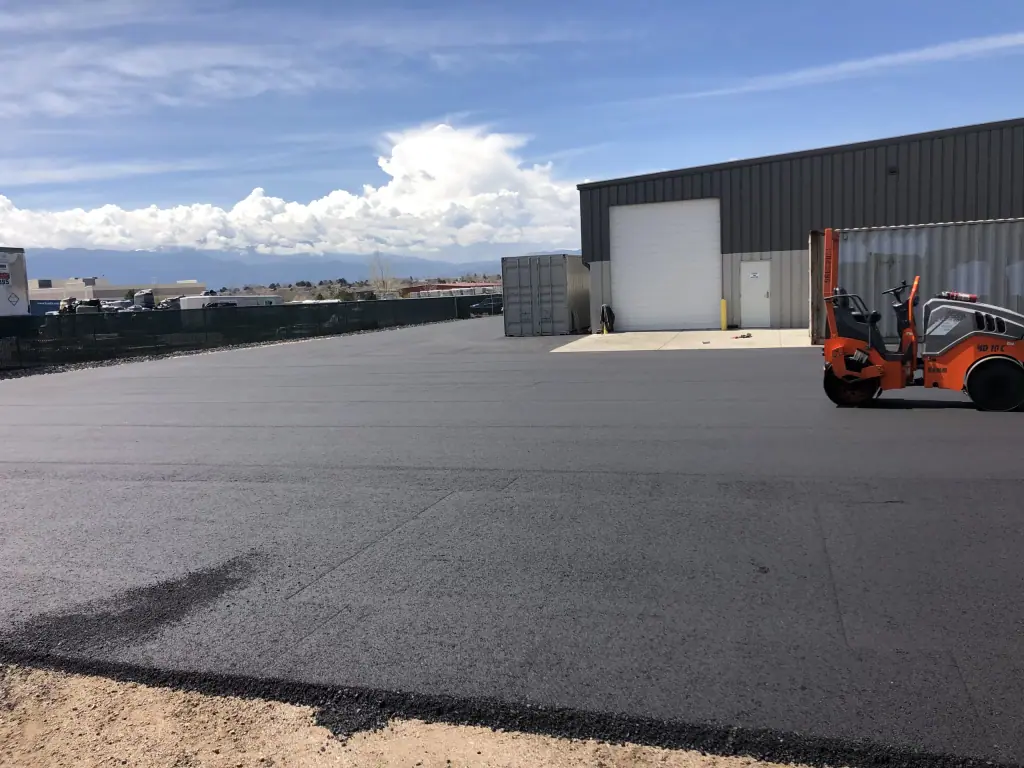
Compact the new layer. A roller passes over the fresh asphalt multiple times to reach the correct density. Proper compaction removes air voids, creates a smooth finish, and gives the surface the strength it needs to handle traffic and weather.
How long does an asphalt overlay take to cure before you can drive on it?
After compaction, a new asphalt overlay needs 24 to 48 hours before vehicle traffic should return to the surface. The asphalt is still cooling and hardening during that window. Walking on it is usually fine after a few hours, but parking or driving on it before the 24-hour mark risks leaving tire marks or causing surface deformation. In hot weather, the wait may extend slightly because asphalt holds heat longer at altitude. We know waiting is inconvenient, but it protects the work you just paid for.
How does asphalt overlay compare to full driveway replacement?
Overlay costs less and takes less time than full replacement, but it only makes sense when the base is still solid. The right choice depends on what's actually wrong with the driveway, not on upfront cost alone.
Full replacement involves tearing out the old asphalt, regrading the base material, and paving from scratch. Overlay skips the tear-out step entirely, which saves both time and disposal costs. A well-done overlay can extend driveway life by 8 to 15 years depending on maintenance and climate conditions. Full replacement, when base failure is present, is the better long-term investment because overlay over a failed base will fail faster than either option done correctly. Sometimes the repair is the right call, and sometimes you're throwing money at something that's done.
For Palmer Lake homeowners with driveways on sloped or mountain lots, base stability is especially important to assess first. Sloped lots shed water differently, and any weakness in the base shows up faster on a grade.
| Factor | Overlay | Full Replacement |
|---|---|---|
| Cost level | Lower upfront | Higher upfront |
| Time to complete | Shorter | Longer |
| Base requirement | Must be structurally sound | Base is rebuilt as part of the job |
| Lifespan added | 8 to 15 years | 20 to 30 years for new driveway |
| Best use case | Surface wear with a solid base | Base failure, deep cracking, or drainage failure |
How long does an asphalt overlay last in Colorado's climate?
A properly installed asphalt overlay in Colorado typically lasts 10 to 15 years with routine maintenance. The actual lifespan depends on how well the base was prepared, how thick the overlay was applied, and how consistently the surface is maintained after installation.
Palmer Lake sits above 7,000 feet in elevation, and freeze-thaw cycles here are more frequent than at lower Colorado elevations. Each cycle is a small stress event on the asphalt, and over many cycles and many seasons those stresses add up and age the surface faster than most homeowners expect.
Driveways on north-facing slopes or heavily shaded by trees stay wet longer after rain or snowmelt. That prolonged moisture contact shortens overlay lifespan when drainage isn't moving water away quickly. And ignoring small cracks in the new layer lets water get under the surface and start weakening the base from below. We'd rather you call us before it gets to that point.
What maintenance steps keep an asphalt overlay in good shape?
Three maintenance habits protect an asphalt overlay in Colorado's high-altitude climate:
- Seal coat every 3 to 5 years. Seal coating slows surface oxidation, keeps the asphalt flexible, and blocks moisture from working into small cracks.
- Seal cracks as soon as they appear. Small cracks sealed early stay small. Left alone, they let water in and accelerate damage through freeze-thaw expansion.
- Keep edges and drainage channels clear. Debris and soil buildup along the driveway edges trap moisture and allow water to undercut the base over time.
Regular crack sealing is the single most effective thing you can do to extend overlay life in a high-altitude Colorado climate. Simple, but it makes a real difference.
When should you call an asphalt contractor in Palmer Lake instead of DIYing?
You should call a licensed asphalt contractor when the driveway needs a proper base inspection, leveling work, or hot-mix asphalt. None of those are realistic DIY tasks. Hot-mix asphalt must be laid and compacted at the correct temperature using professional equipment. Without a paving machine and roller, getting a consistent, properly compacted surface isn't possible.
A contractor can also assess whether overlay is appropriate or whether full replacement is the safer choice for your specific driveway. That judgment requires probing the base, checking drainage slope, and reading crack patterns accurately. Getting that assessment wrong leads to money spent on an overlay that fails early.
Palmer Lake's elevation and local soil conditions require local knowledge to get base preparation right. Soils in mountain communities can hold moisture and shift more under freeze-thaw cycles than sandy or gravel soils. We know what to look for up here because we've been working these conditions for years.
DIY cold-patch products are only suitable for filling small, isolated potholes. Cold-patch doesn't bond the same way hot-mix does, and it's not a substitute for a properly prepared overlay. Using it as a long-term fix on a driveway that needs resurfacing typically leads to repeated patching with no lasting improvement. You'll spend more in the long run.
Getting an on-site evaluation from a local asphalt contractor is the fastest way to know which repair option fits your driveway. Paul's Asphalt Service LLC. provides asphalt driveway resurfacing services in Palmer Lake, CO for homeowners who need an honest assessment before any work begins.
The bottom line
Applying a new asphalt layer over an existing driveway is possible and cost-effective, but only when the base beneath is structurally sound. The three factors that decide whether overlay is right are base condition, crack severity, and drainage quality. In Palmer Lake and surrounding mountain communities, freeze-thaw cycles make a proper base inspection essential before any overlay work begins. For a professional evaluation of your driveway's condition, explore the asphalt driveway resurfacing services in Palmer Lake, CO offered by Paul's Asphalt Service LLC.
Wondering if your driveway qualifies for an overlay? Paul's Asphalt Service is an asphalt contractor serving Palmer Lake that will check the base during a free estimate. Call (719) 232-1523.