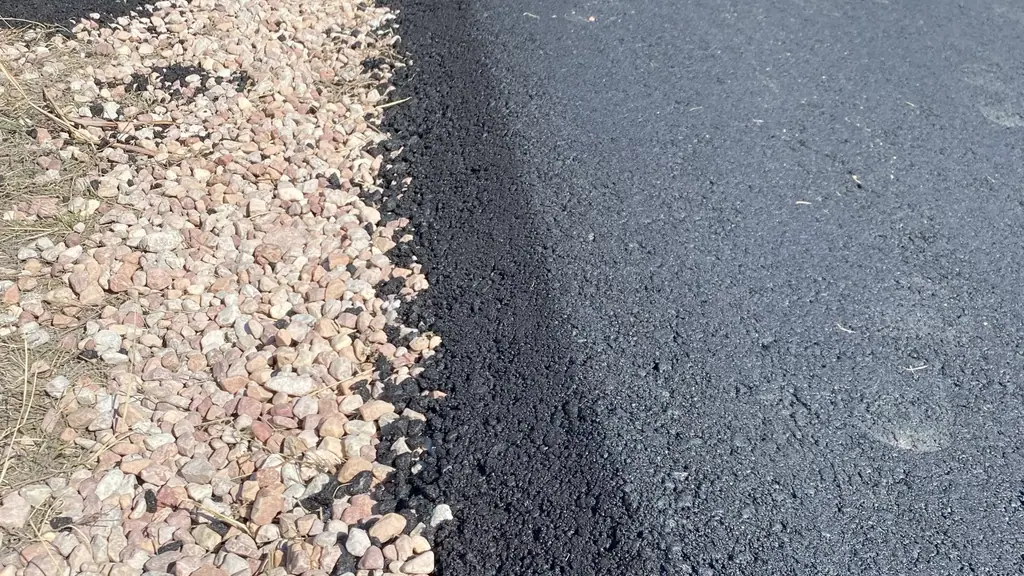
No, you cannot install asphalt directly over bare dirt and expect it to last. Is it possible to install asphalt directly over bare dirt? Technically yes, but the pavement will fail quickly. Asphalt is a flexible material that depends entirely on what sits underneath it for strength and stability. Bare dirt shifts with moisture, temperature swings, and vehicle weight. When the ground moves, the asphalt above it cracks, sinks, and forms potholes. A compacted gravel or aggregate base layer is required under any asphalt surface to distribute load and resist movement. Most asphalt projects in Colorado require at least 4 to 6 inches of compacted Class 6 aggregate base, installed and graded correctly, before any hot-mix asphalt is applied.
Why can't asphalt be laid directly over bare dirt?
Asphalt cannot be laid directly over bare dirt because bare soil does not provide the rigid, stable foundation that asphalt needs to carry weight. Asphalt is a flexible material. It bends slightly under load rather than cracking like concrete. That flexibility is a strength, but only when the material underneath is firm and doesn't move.
Bare dirt compresses and shifts with moisture changes, freeze-thaw cycles, and the weight of vehicles. Rain softens it. Dry summers shrink it. Winter frost pushes it upward. Every one of those movements travels straight up into the pavement layer above.
When the ground moves underneath asphalt, the pavement cracks, sinks, and develops potholes in a short time. Think of bare dirt like a soft mattress — no rigid surface laid on top of a soft mattress will stay flat under repeated stress. This is true for residential driveways, commercial parking lots, and private rural roads alike. The application size doesn't change the physics.
What role does the sub-base play under asphalt?
The sub-base is a layer of compacted crushed aggregate placed between the native soil and the asphalt surface. Its job is to spread vehicle loads across a wide area so that no single point of native soil takes too much pressure. The sub-base also channels water away from the pavement, reducing the moisture-driven soil movement that causes asphalt to fail.
Without a sub-base, every vehicle that crosses the pavement pushes directly down into soft native soil. The soil gives way, a void forms beneath the asphalt, and the surface above collapses into that void. We've seen it happen to driveways that looked fine at installation and were cracking within two winters.
What happens if you skip the base layer under asphalt?
Skipping the base layer almost always causes the asphalt to fail prematurely, often in just a few years. We see it on jobs where base preparation was skipped or rushed, and it goes the same way every time.
First, the native dirt shifts. Moisture, traffic, and temperature changes cause the soil to compress or move unevenly. As soil settles in some spots and swells in others, hollow pockets develop under the pavement. Once those voids are there, the asphalt above them bends past its limit and develops edge cracking, alligator cracking (the web of small cracks that looks like alligator skin), and longitudinal cracks along the center. Rain and snowmelt seep down through those open cracks and soften the dirt further, which speeds everything up. Eventually the surface sinks into the voids, potholes open up, and the pavement becomes unsafe and unusable.
In Colorado, freeze-thaw cycles push that process along hard. Moisture trapped under cracked asphalt expands when it freezes, forcing cracks wider with each winter cycle. That's not a slow process up here, damage compounds season after season.
Repairing asphalt that was laid over bare dirt usually requires removing the failed pavement completely, installing the base from scratch, and repaving. In effect, you pay for the job twice. That's the part we really don't want to see happen to you.
What base material does asphalt actually need underneath it?
Asphalt needs a compacted layer of crushed aggregate, usually called road base or Class 6 aggregate base course, installed and graded before paving begins. This is the standard base material for asphalt paving across Colorado.
What is Class 6 aggregate base course?
Class 6 aggregate base course (ABC) is angular crushed rock, typically a mix of crushed stone and fines (small rock particles) graded to a specific size range as defined in CDOT's Standard Specifications for Road and Bridge Construction. The angular shape of the particles is what makes Class 6 ABC effective. Angular pieces lock together tightly when compacted, creating a dense, solid platform that resists movement under load.
Rounded river rock or pea gravel doesn't lock together the same way. Rounded stones roll against each other under pressure, which makes them a poor base material for asphalt. We see people try to use what they have on hand, and it doesn't end well.
Class 6 ABC also drains water away from the asphalt layer. Water moves through the aggregate and out to the edges of the base, reducing moisture buildup and the frost heave that moisture causes.
Some projects use a sub-base layer of larger crushed rock beneath the Class 6 ABC for added depth on soft soils. Geotextile fabric is sometimes placed directly on the native soil before any base material is added. The fabric separates the native soil from the aggregate, preventing the two materials from mixing over time and weakening the base. And the aggregate must be graded to the correct drainage slope so water runs away from the paved surface rather than pooling beneath it.
How thick does the base need to be under asphalt?
For a residential driveway, the compacted aggregate base typically needs to be at least 4 to 6 inches thick. Heavier-use areas like parking lots often need 6 to 12 inches of compacted base material.
What drives that number is soil type, expected traffic, and climate. Soft, expansive, or clay-heavy soils need more base depth than firm, well-draining soils. A driveway that handles passenger cars needs less than a parking lot taking delivery trucks or heavy equipment. And in Colorado's mountain and Front Range areas, freeze-thaw depth pushes base thickness requirements up because deeper bases resist frost heave better than shallow ones.
| Application Type | Recommended Compacted Base Thickness |
|---|---|
| Residential driveway | 4 to 6 inches |
| Commercial parking lot | 6 to 8 inches |
| Rural access road or heavy-use area | 8 to 12 inches |
The asphalt layer itself is typically 2 to 3 inches thick for residential driveways and 3 to 4 inches thick for commercial applications. A thicker asphalt layer does not fix an inadequate base. The base is what determines whether the pavement survives. We can't say that plainly enough.
A contractor typically inspects existing soil conditions on-site before recommending a base thickness. Soft or wet soil found during excavation may require deeper base work than an initial estimate predicted, and that's not a surprise we spring on you mid-job. It's something we talk through before the paving crew shows up.
Can you pave asphalt over gravel instead of bare dirt?
Yes, paving asphalt over an existing gravel surface is often possible, but the gravel must first be inspected, graded, and compacted before any asphalt goes on top. Not all gravel qualifies as a ready base.
What gravel types work as an asphalt sub-base?
Angular crushed aggregate works well as an asphalt sub-base. Rounded river rock or natural gravel with smooth stones doesn't compact tightly enough and may need to be replaced with crushed material before paving begins.
The existing gravel layer must be at least 4 inches deep and compacted to a firm, even surface with no soft spots. A contractor will probe the gravel and may perform a test-roll, driving a loaded dump truck or roller over the surface, to identify weak areas. Soft spots flex visibly under a loaded vehicle. Any soft spot found during a test-roll gets dug out, filled with proper Class 6 aggregate base course, and re-compacted before paving proceeds.
Gravel-to-asphalt conversions are a project type we handle regularly on rural driveways and private roads in the Palmer Lake and El Paso County area. When an existing gravel base is deep enough and structurally sound, paving over it can be cost-effective and produce a long-lasting result. When the gravel is too shallow, too loose, or made of the wrong material, replacing or supplementing it is the right call before any asphalt is applied.
How does Colorado soil affect asphalt base requirements?
Colorado's varied soils, from expansive clay in the Front Range foothills to rocky mountain soils near Palmer Lake, can significantly increase base depth and preparation requirements for asphalt. Soil type is one of the most important site-specific factors in any paving project.
Why is freeze-thaw cycling so damaging to Colorado pavement?
Colorado has frequent freeze-thaw cycles in many areas, particularly at higher elevations. Each cycle works like this: water in the soil freezes and expands, pushing upward with tremendous force. When the soil thaws, it contracts and settles. Repeated expansion and contraction stresses any pavement layer above, especially one with an inadequate base.
At higher elevations, freezes are harder and temperature swings happen faster. Properties near Palmer Lake and the Tri-Lakes area sit at elevations where this cycle is more intense than in lower areas of El Paso County. You feel it in your roads, and we see it every spring when the call volume picks up.
Expansive clay soils compound the problem. Clay absorbs water and swells noticeably when wet, then shrinks and cracks when dry. Any pavement sitting above clay-heavy soil without a deep, properly compacted base will follow the clay's movement, cracking in dry periods and heaving in wet ones.
Rocky or gravelly native soils near Palmer Lake tend to be more stable than clay-heavy soils, but stable native soil still requires proper grading and a compacted base layer before paving. A soil inspection or site assessment helps determine whether additional sub-base depth, fabric reinforcement, or drainage work is needed before base preparation begins.
What does proper asphalt base preparation actually involve?
Proper asphalt base preparation involves excavating the native soil, adding and grading the correct aggregate base material, compacting the base in lifts, and verifying the surface is firm and level before paving begins. Skipping or rushing any part of it creates weak points that show up as cracks or sinking after the pavement is laid.
First comes excavation. We remove topsoil, organic material, and any soft or unstable native soil down to a firm, stable layer. Organic material like roots and decomposed matter compresses over time and has to come out completely. How deep we go depends on soil type and the required base thickness for the project.
Then we add the crushed aggregate in lifts, meaning layers of 3 to 4 inches at a time. Each lift gets compacted before the next one goes down. That's not extra work for its own sake — compaction equipment can only reach full density through a limited depth of material. Dump it all in at once and the bottom of the pile never gets there.
Once the base is built up, we grade it to the correct drainage slope, typically 1 to 2 percent angled away from buildings and structures. Proper grade keeps water from pooling on or under the finished pavement.
After grading, a plate compactor or vibratory roller passes over the base to achieve the required material density. If the base isn't at the right density before asphalt goes down, it will continue to settle after paving and pull the surface down with it.
The last thing we do before calling in the paving crew is walk the base and, on larger jobs, run a test-roll to find any remaining soft spots. Anything soft gets repaired before hot-mix asphalt is ordered. We're not going to pour asphalt over a base that isn't ready.
When should you hire a professional asphalt contractor for base work?
You should hire a professional asphalt contractor any time the project involves more than a simple surface patch, especially when bare soil, soft ground, drainage issues, or grading work is part of the job.
Base preparation requires heavy equipment that most property owners don't have access to. Plate compactors, motor graders, and vibratory rollers are needed to properly compact aggregate base material to the required density. Hand-tamping or driving over loose gravel with a pickup truck doesn't get you there, we've seen the results of that approach, and it's not pretty.
A professional contractor can identify problem soils, drainage patterns, and soft spots that an untrained eye will miss during a site walk. Catching those issues before paving begins is far less expensive than discovering them after the asphalt has been laid and has started to fail.
For rural properties in the Palmer Lake and Tri-Lakes area, long driveways and private access roads often require professional grading equipment before paving. The distances involved and the variability of native soil across a long run make hand preparation ineffective.
A qualified contractor will follow local grading standards and drainage requirements when preparing any base. Building the base correctly from the start avoids the cost of removing failed asphalt and rebuilding from scratch.
The bottom line
No, you cannot install asphalt directly over bare dirt and expect the pavement to hold up. A compacted aggregate base layer is required under any asphalt surface, especially in Colorado, where freeze-thaw cycles and varied soils put constant stress on pavement that lacks proper support underneath. Whether you're planning a residential driveway, a rural access road, or a commercial lot near Palmer Lake, the base is the most important part of the entire project. For expert guidance and professional base preparation from the ground up, explore our asphalt paving services in Palmer Lake, CO.
Thinking about paving over dirt or gravel? Talk to a local asphalt contractor in Palmer Lake who will check your base and drainage first. Free estimates at (719) 232-1523.