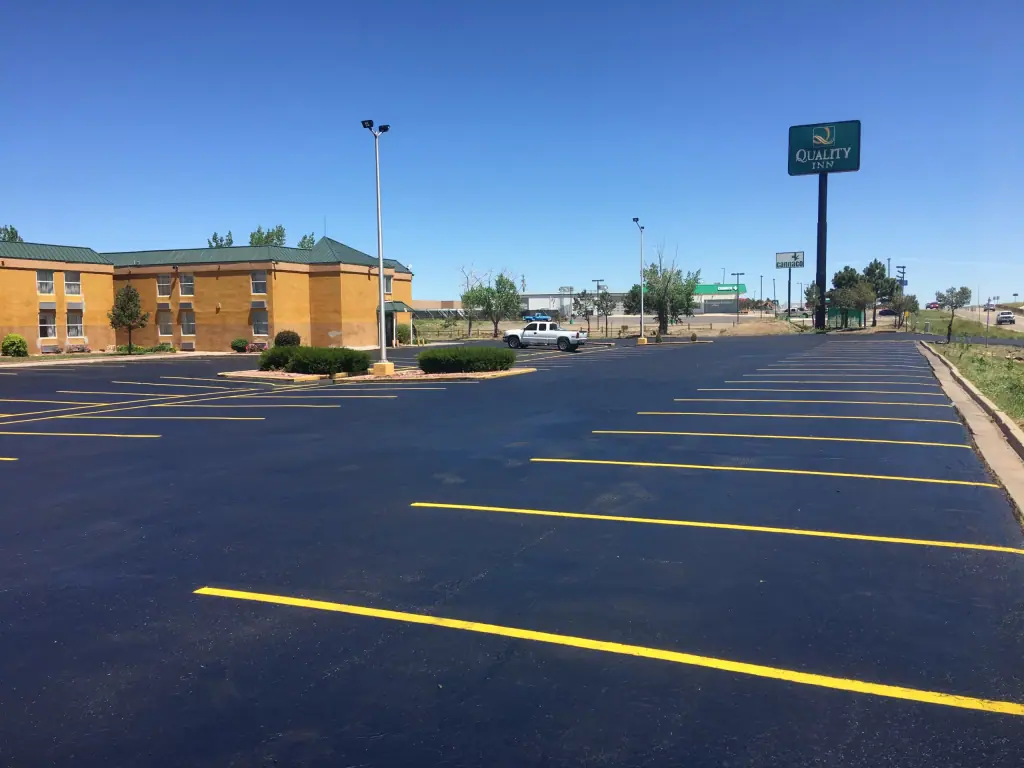
Pressure washing is safe to use on an asphalt driveway when the right pressure and nozzle are used. A low PSI setting paired with a wide-angle nozzle held well above the surface cleans effectively without damaging the binder layer. Excessive pressure can strip the material that holds asphalt aggregate together, causing early cracking and raveling. Asphalt that is freshly paved, freshly sealed, cracked, or structurally weakened is much more vulnerable and should not be pressure washed until repairs are made. In climates like Palmer Lake, CO, forcing water into surface cracks before a freeze creates added risk of rapid deterioration. So the short answer is yes, but only within clear limits.
How Does Pressure Washing Actually Affect Asphalt?
Pressure washing pushes water into asphalt at high force, which can loosen the binder that holds the surface together. Asphalt pavement is made of aggregate stones (gravel and sand) held in place by a bitumen binder, as described by the Federal Highway Administration's asphalt pavement resources. That binder is what high-pressure water threatens most.
Water forced into existing micro-cracks speeds up freeze-thaw damage. This is a real concern in Palmer Lake, CO, where temperatures swing sharply between day and night, especially in fall and spring. A small crack filled with water can widen overnight once that water freezes and expands. We see it happen every spring when the snow melts and driveways that looked fine in October are suddenly showing new damage.
Surface oxidation naturally makes older asphalt more porous and brittle over time. An aged driveway that looks solid may have a weakened binder layer just below the surface. Lower-pressure rinsing moves surface dirt without penetrating that layer as aggressively.
What Happens to Asphalt If You Use Too Much Pressure?
Three distinct types of damage can occur when pressure is too high.
Spalling happens when water pressure chips away small pieces of the surface aggregate. The driveway develops a rough, pitted texture that holds water and dirt more easily after washing.
Raveling is the gradual loosening of aggregate stones from the binder. A section that has raveled looks like loose gravel is sitting on the surface. Once raveling starts, it spreads quickly without repair.
Binder stripping is the most serious outcome. High pressure literally washes the bitumen coating off the aggregate, leaving behind a weak, crumbly layer. It's not reversible through cleaning alone and requires professional patching or resurfacing. That's the outcome we want you to avoid.
What PSI Is Safe for Pressure Washing an Asphalt Driveway?
Asphalt driveway cleaning generally calls for a lower pressure setting than concrete cleaning. Pressure settings appropriate for concrete are typically too aggressive for most asphalt surfaces. Consumer-grade and rental pressure washers can vary widely in their output, so always check the gauge before starting and dial down as needed.
The age and condition of the asphalt also affect how well it tolerates water pressure. An older, unsealed driveway may need a lower setting than a recently paved one, and a driveway in poor condition may not tolerate even moderate pressure without damage.
PSI Guidelines for Asphalt Driveways
- Fresh asphalt (newly paved): Avoid pressure washing entirely. The binder is still curing and water pressure can mar the surface texture.
- Sealed asphalt (recently coated): Use the lowest effective setting. Sealcoat is thin and can strip easily before it's fully cured.
- Aged asphalt (unsealed): Use a wide-angle nozzle at a low pressure setting. Inspect for cracks before starting.
- Oil-stained areas: Apply a degreaser first, then rinse at a low setting. Pressure on oil-softened asphalt accelerates surface damage.
- Cracked sections: Do not pressure wash until cracks are sealed. Any water pressure forces water into the base layer through open cracks.
When Is Pressure Washing a Bad Idea for an Asphalt Driveway?
Pressure washing is a bad idea on asphalt that is cracked, crumbling, freshly sealed, or newly paved. The surface is far more vulnerable to water damage in any of those conditions, even at low pressure.
Newly paved asphalt needs time to fully cure before it can tolerate water pressure. Washing before that window closes can mar the surface finish and disrupt the binder before it fully sets. Fresh sealcoat has the same problem: water pressure during the cure window can lift the coating right off the surface, leaving bare patches that need recoating. Honestly, we'd rather you wait a few extra days than have to come back out for a preventable repair.
Driveways with active potholes or alligator cracking (a pattern of interconnected cracks resembling an alligator's skin) allow pressurized water to undercut the base layer. Once the base is saturated, the damage spreads far beyond the cracked area.
Is It Safe to Pressure Wash Asphalt in Cold Weather?
Pressure washing asphalt in cold weather adds a freeze-thaw risk specific to areas like Palmer Lake, CO, which sits at a higher elevation with rapid overnight temperature drops.
Water that enters even a hairline crack during washing can freeze within hours after the temperature drops below 32°F (0°C). When water freezes, it expands by roughly 9 percent. That expansion widens the crack from within, a process that repeats with every freeze-thaw cycle through fall and winter.
In the Palmer Lake area, fall temperatures bring cold overnight lows. If washing is needed before winter, inspect and seal every visible crack first, then allow the sealant to fully cure before rinsing the surface. Don't rush that step. The cracks that get skipped in October are the ones that become real problems by March.
What Nozzle Should You Use on an Asphalt Driveway?
A wide-angle nozzle is the safest choice for pressure washing an asphalt driveway. Nozzle angle controls how concentrated the water stream is. A narrower angle means more force directed at a smaller spot, which is exactly the wrong approach for asphalt.
| Nozzle Color | Degree | Safe for Asphalt? | Notes |
|---|---|---|---|
| Red | 0° | No | Stripping rust from metal only |
| Yellow | 15° | No | Concrete surface cleaning |
| Green | 25° | Sometimes | Stubborn oil stains, held well away from surface and moved constantly |
| White | 40° | Yes | General asphalt driveway cleaning |
A 0-degree red-tip nozzle can chip or gouge asphalt and should never be used on a driveway surface. No exceptions. A 25-degree green-tip nozzle may work for stubborn oil stains when held at a safe distance and moved constantly, but the 40-degree white tip is the right tool for general cleaning.
Rotating or turbo nozzles concentrate force in a circular pattern and are generally better suited for concrete than asphalt. The circular motion focuses repeated pressure on the same surface points in a way that damages asphalt binder.
How Do You Pressure Wash an Asphalt Driveway Without Causing Damage?
Start at the lowest effective pressure setting, use a wide-angle nozzle, and keep the wand moving at all times. Stopping the wand over a single spot for more than a second or two focuses too much force in one area. Keep it moving.
Here's the order we'd walk you through on any job like this:
- Clear loose debris with a broom before any water is applied. Wet debris becomes a slipping hazard and can clog your pressure washer's inlet.
- Pre-soak oil stains with a degreaser rated safe for asphalt. Let the degreaser dwell for several minutes before rinsing. Avoid petroleum-based degreasers, which can soften asphalt binder.
- Begin at the highest point of the driveway and work downhill. This keeps dirty water flowing away from areas you've already cleaned.
- Hold the nozzle well above the surface and sweep in overlapping passes. Overlapping passes prevent streaking and distribute pressure more evenly.
- Rinse thoroughly and allow the surface to fully dry before applying sealcoat. Applying sealcoat over a damp surface can trap moisture underneath and cause the coating to bubble or peel.
Can You Use a Pressure Washer to Remove Oil Stains from Asphalt?
A pressure washer can help lift oil stains from asphalt, but only when paired with the right degreaser and the right technique. Water pressure alone rarely removes a set oil stain because oil and water don't mix.
Apply a biodegradable, asphalt-safe degreaser directly to the stain. Allow it to break down the oil before rinsing with a wider-angle nozzle held well away from the surface. For old or deeply soaked stains, a second application may be needed. Avoid scrubbing oil stains with a wire brush before washing. Wire bristles scratch the surface and open small grooves where future dirt and water collect. A stiff nylon brush is a safer option if agitation is needed before rinsing.
Does Pressure Washing an Asphalt Driveway Remove Sealcoat?
Yes, pressure washing at high settings or with a narrow nozzle can strip sealcoat from an asphalt driveway. Sealcoat is a thin protective layer (usually coal tar emulsion or asphalt emulsion) applied over the surface. It's not bonded as deeply as the asphalt itself.
Holding the nozzle too close, using a narrow-angle tip, or moving the wand slowly all risk stripping the sealcoat, even after it has fully cured. Homeowners who notice dull, gray, or patchy areas after washing may have removed sealcoat without realizing it. Those bare patches expose the raw asphalt underneath to UV rays, rain, and vehicle fluids, and the driveway ends up needing resealing sooner than it should. Preventable, every time.
How Long After Sealcoating Can You Pressure Wash Asphalt?
Allow sealcoat adequate time to cure and bond to the surface before pressure washing or even rinsing an asphalt driveway. Manufacturers and contractors typically recommend waiting at least several days before any water contact.
In cooler or humid conditions, like those common in Palmer Lake, CO during fall, full cure can take longer. If the sealcoat still feels tacky or soft to the touch, it's not ready. Wait until it's fully hardened before pressure washing, and give it extra time if overnight temperatures have been low during the cure period. When in doubt, wait another day. It's not worth rushing.
When Should You Call an Asphalt Contractor Instead of Pressure Washing?
Call an asphalt contractor when the driveway has cracks wider than a quarter inch, potholes, or surface raveling that pressure washing would worsen. Pressure washing cleans a surface. It doesn't repair structural damage underneath.
Oil-soaked areas that have softened the asphalt need professional patching, not just cleaning. Soft spots feel spongy underfoot and may deflect under vehicle weight. Washing a soft spot accelerates the breakdown of the already-weakened binder.
Driveways showing alligator cracking have base failure. Water pressure on alligator-cracked asphalt drives water through dozens of open cracks at once and saturates the base layer. A saturated base fails faster and costs more to repair than one caught early. We'd rather walk a driveway with you before it reaches that point than patch it after a hard winter.
In Palmer Lake, CO, freeze-thaw cycles can turn small surface cracks into more significant damage over a single winter season. Walk the surface yourself before you hook up the pressure washer. If you're not sure what you're looking at, give us a call and we'll take a look with you.
Signs You Need a Contractor Before You Pressure Wash
Check your driveway for these conditions before connecting the pressure washer:
- Cracks wider than a quarter inch allow pressurized water to reach the base layer directly.
- Alligator cracking or large interconnected crack patterns signal base failure, not just surface wear.
- Soft or spongy spots that flex under foot pressure have lost structural integrity and will worsen with water intrusion.
- Active potholes or crumbling edges give pressurized water a direct path under the pavement.
If your driveway shows any of these signs, repairs come before cleaning. Once the surface is repaired and fully cured, a careful low-pressure rinse is safe again. When you're ready for that next step, asphalt driveway services in Palmer Lake, CO can get the surface back in shape before you pick up the pressure washer.
Keep Your Driveway Safe Before You Start the Pressure Washer
Pressure washing an asphalt driveway is safe when a low pressure setting and a wide-angle nozzle are used, and the surface is in sound condition with no active cracks or soft spots. Cracked, newly paved, freshly sealed, or structurally failing asphalt should not be pressure washed until repairs are completed. In Palmer Lake, CO, the freeze-thaw cycle makes it especially important to seal any water entry points before fall temperatures drop so surface water can't work deeper into the pavement overnight.
If your driveway needs more than a rinse, Paul's Asphalt Service is an asphalt contractor in Palmer Lake, CO that handles crack sealing, sealcoating and repair. Call (719) 232-1523.