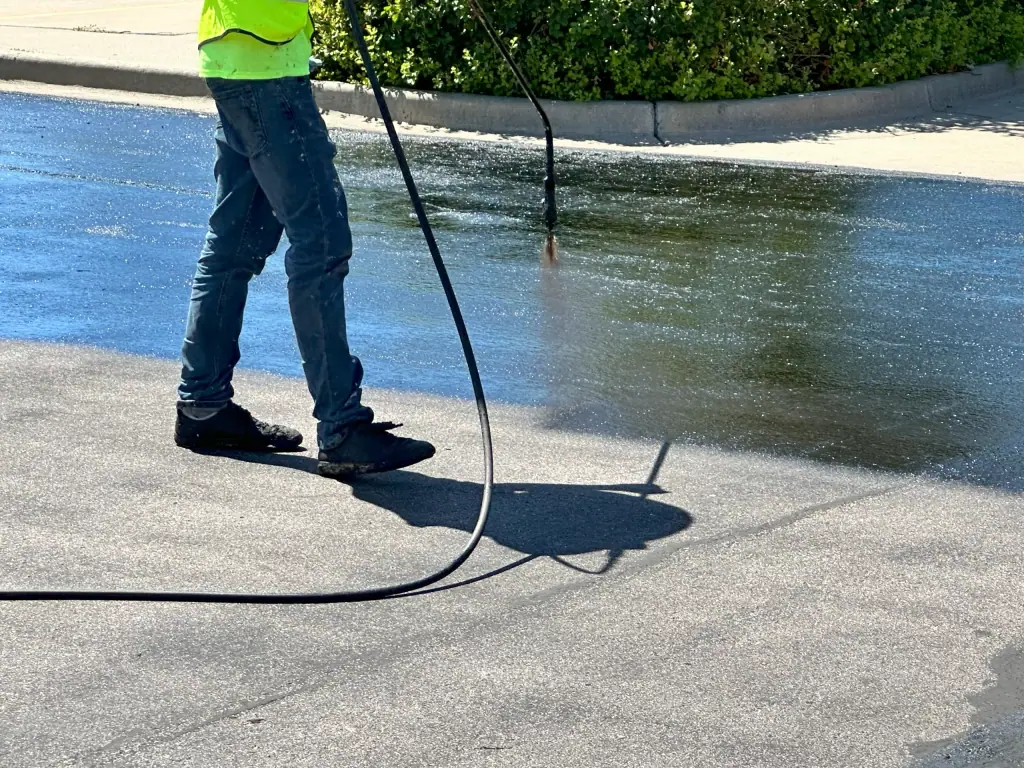
Palmer Lake’s freeze-thaw cycles break down unsealed asphalt faster than most property owners expect. Paul’s Asphalt Service LLC handles parking lot sealcoating in Palmer Lake CO for commercial lots, HOA driveways, and paved pads across the Tri-Lakes area. Below you’ll find what to expect from the process, when to schedule, and how to get your lot on the calendar.
Signs Your Palmer Lake Parking Lot Needs Sealcoating Now
Gray color, small surface cracks, and a rough, brittle texture are early warning signs that your asphalt is breaking down. At Palmer Lake’s elevation, UV exposure oxidizes asphalt binder and causes fading to show up earlier than at lower-altitude locations, and we see property owners caught off guard by how fast it happens up here. Property managers and HOA boards who catch surface wear early avoid base damage and full repaving costs.
Check three areas: whether the surface color has gone gray or faded instead of staying deep black, whether the edges are crumbling or chipping along lot borders, and whether drainage channels show standing water or staining. All three point to places where the asphalt is either drying out or already letting water in. If you’re seeing two out of three, don’t wait.
How Contractors Inspect a Parking Lot Before Sealcoating in Palmer Lake
A proper inspection prevents crews from sealing over damage that needs repair first. Before any sealer goes down on a Palmer Lake lot, a contractor walks the full surface and checks visible crack patterns, drainage flow, base stability, and surface texture grade. Colorado’s spring thaw conditions can leave soft spots and heaved edges that must be addressed before sealcoating begins. The inspection results set the repair scope so nothing gets buried under a fresh coat.
We’d rather find a problem during the walkthrough than after the sealer is down. Most lots just need a few areas addressed, but skipping the inspection is how small issues turn into expensive ones.
Crack Repair Must Happen Before Sealcoating Any Palmer Lake Lot
Filling cracks before sealcoating stops water from reaching the base layer, which is where real structural damage starts — a principle consistent with Federal Highway Administration guidance on pavement preservation, which emphasizes crack treatment as a foundational step before surface sealing. The process follows a clear order: clean the crack, apply hot-pour or cold-pour filler depending on crack width and depth, let the filler cure fully, then apply the sealcoat over the repaired surface.
Freeze-thaw cycles common to high-altitude Colorado communities widen cracks every season. Sealing without filling first fails fast. We’ve seen fresh sealer start peeling within a single winter when the prep was skipped. Crack fill and sealcoat are separate steps and should be treated that way on any commercial lot or HOA pad.
What Happens During the Sealcoating Process at a Palmer Lake Property
Property managers scheduling their first commercial sealcoat job in Gleneagle or anywhere in the Palmer Lake area should know the steps before the crew arrives. The process moves in this order:
- Surface cleaning to remove dirt, oil, and loose debris
- Edge work to prep borders and transition areas
- Crack fill cure check to confirm repairs are set
- Sealer application in one to two coats depending on surface condition
- Drying time before lot reopening
Colorado afternoon weather can change quickly at higher elevations, so cure conditions are factored into project scheduling. Knowing this sequence helps you plan lot closure times and communicate clearly with tenants. The more lead time you give them, the smoother the day goes.
Drying and Cure Time After Parking Lot Sealcoating in Palmer Lake CO
Sealer that is opened to traffic too soon will show tire marks and surface damage before the job is even a day old. Cure times vary based on temperature, humidity, and elevation. Cooler overnight temperatures and higher elevation slow the process, so the longer end of any recommended range is common in mountain and foothill communities. Rushing this step is the one mistake that’s completely avoidable, and it’s one we won’t let happen on a job we’re running.
Your contractor will give you specific guidance on when foot and vehicle traffic can safely return based on the conditions at the time of your job. Post cure time notices to tenants and visitors before the crew starts work so everyone has time to plan.
How Often Palmer Lake Parking Lots Should Be Sealcoated
The right sealcoating interval depends on traffic volume, sun exposure, and how the surface holds up over time. Many commercial lots fall into a multi-year cycle. Communities with significant freeze-thaw activity and high UV exposure will find their lots need attention sooner. HOA boards and commercial property owners along the Monument corridor who plan ahead spend far less over time than those who wait for visible failure. A simple maintenance log with the last service date and a projected next window makes multi-year budgeting straightforward.
Frequently Asked Questions
How do I know if my Palmer Lake parking lot is ready for sealcoating or needs repairs first?
Cracks with significant width or depth, or crumbling edges, mean repair work comes before sealcoating. Shallower surface cracks may be fillable as part of the same visit. A quick visual walk of your lot’s surface, edges, and drainage channels will give you a general sense of which category you’re in. A contractor inspection gives you a clear answer before any scheduling happens.
What time of year is best to schedule parking lot sealcoating in Palmer Lake CO?
Late spring through early fall is the best window for parking lot sealcoating in Palmer Lake CO because sealer needs warm, dry conditions to cure properly. Palmer Lake’s elevation means the warm-weather scheduling window can be shorter than in lower-elevation Colorado communities. Booking early in the season gives you more date options and reduces the risk of weather delays. Wait until late summer and you may be competing for the last open slots before temperatures drop. Up here, that window closes faster than people expect.
How long will my Palmer Lake parking lot be closed after sealcoating?
Cure time depends on temperature, humidity, and elevation at the time of application. Cooler overnight temperatures common at Palmer Lake’s elevation extend the time needed before vehicle traffic safely returns. Your contractor will give you specific guidance based on the conditions at your job. Posting notices to tenants and visitors before the work begins keeps disruptions manageable.
Can an HOA in the Woodmoor or Gleneagle area schedule sealcoating for multiple lots at once?
HOA projects with multiple paved surfaces can often be staged so work moves through one area while others remain open. This approach works well for communities with shared driveways, guest parking areas, and main lot surfaces all needing service, and it spreads disruption more evenly across the project window. Discuss the specifics of your property layout with your contractor to determine the most practical sequencing for your situation.
Does parking lot sealcoating in Palmer Lake also include line striping?
Sealcoating and line striping are separate services, and parking lot lines must be repainted after the sealer has fully cured. Applying new lines over uncured sealer causes adhesion problems, so the cure window between the two steps matters. Coordinating both services as part of the same project can reduce the total number of lot closures and get your lot back in service faster.
How many coats of sealer does a Palmer Lake parking lot typically need?
Most parking lots need one to two coats of sealer, with the specific count determined by surface condition and traffic level. High-traffic areas or surfaces that are badly oxidized benefit from a second coat rather than a single heavy application. The inspector will recommend the coat count after rating the surface texture and condition during the pre-job walkthrough. Getting the coat count right from the start means the sealer holds up through the first full freeze-thaw season after application.