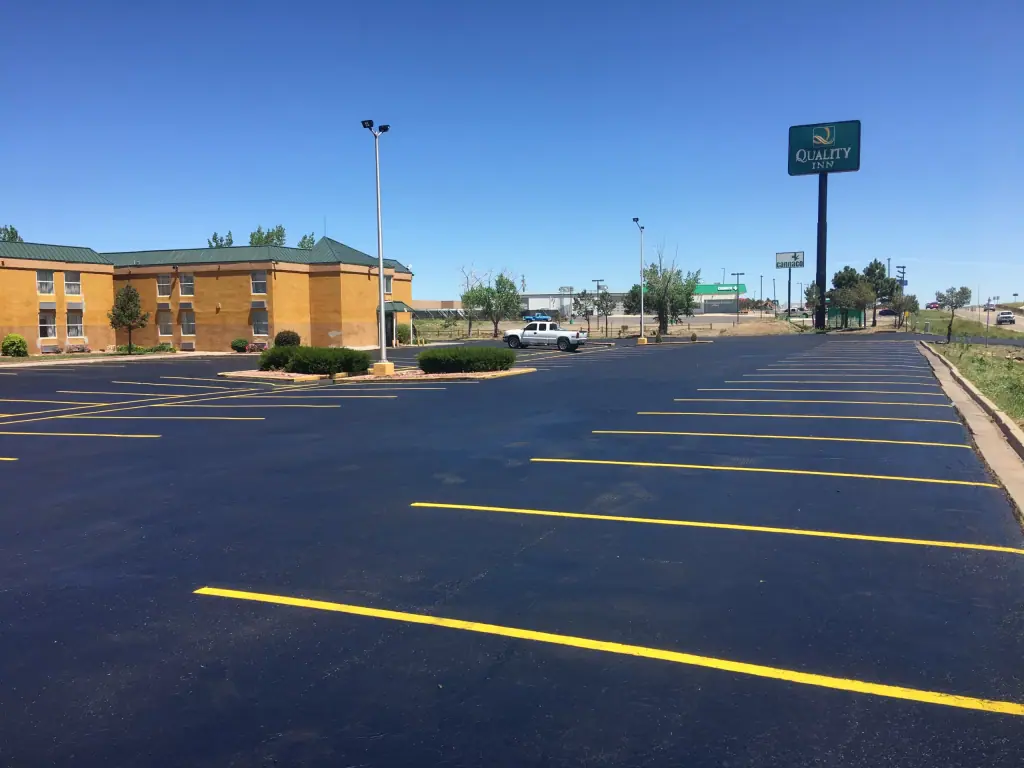
In Palmer Lake, asphalt paving projects range from short residential driveways to HOA roads and rural acreage access lanes. Paul’s Asphalt Service LLC covers driveway paving, parking lot paving, gravel-to-asphalt conversions, and base preparation. Licensed asphalt contractors serve Palmer Lake and surrounding Tri-Lakes communities on a planned-project basis. A qualified contractor delivers lasting results built for Colorado’s freeze-thaw climate.
How to tell when your asphalt needs full replacement in Palmer Lake
Knowing whether your aging driveway needs replacement or repair prevents wasted money on a failing base. Palmer Lake’s freeze-thaw cycles accelerate sub-base heave, which makes early diagnosis important for homeowners noticing cracks, soft spots, or surface crumbling.
Watch for these warning signs:
- Alligator cracking (a pattern of interlocking cracks across the surface)
- Potholes larger than a dinner plate
- Edge crumbling along the driveway border
- Standing water that remains after rain
When asphalt shows widespread base failure rather than isolated surface wear, full replacement is typically more cost-effective than patching. We’d rather tell you that upfront than patch it twice and have the same conversation a year from now. Patching over a broken base only delays the same problem.
Choosing the right asphalt paving scope for your property
Matching paving scope to actual base condition keeps the finished pavement from failing ahead of schedule. Palmer Lake residential driveways and HOA roads often require different base depths because of varying soil types beneath each surface.
Scope options, from least to most involved:
- Crack seal only
- Seal coat application
- Mill-and-overlay (grinding off the top layer and paving fresh over a sound base)
- Full removal and replacement
- New paving on an existing gravel base
Base preparation quality determines how long the pavement lasts more than the surface mix alone. What sits below the surface matters more than what goes on top of it. We tell every customer that, because it’s the part that gets underestimated most often.
Site preparation steps that protect every asphalt paving project
Proper grading and compaction prevent settlement, rutting, and drainage problems before the first load of asphalt arrives. HOA decision-makers and rural acreage owners both benefit from thorough site prep before paving begins. Palmer Lake’s rocky mountain soil requires grading equipment suited to the elevation and slope of each property.
Preparation follows this order:
- Vegetation removal down to bare soil
- Subgrade grading for proper slope and drainage
- Aggregate base installation at the correct depth
- Compaction testing to confirm base stability
- Edge form setting to define the paving boundary
Gravel-to-asphalt conversions need extra base depth to handle the load and drainage shifts that come with replacing a permeable surface. We’ve shown up to jobs where that step was skipped on a previous conversion, and the cracking pattern tells you exactly what went wrong. You can see it within a couple of seasons.
What happens during the asphalt paving installation process
First-time paving customers in Palmer Lake can plan their day better when they know what to expect on the job. Colorado’s warm paving window is limited by seasonal temperatures, and Palmer Lake’s elevation shortens that window even further compared to lower-elevation Front Range cities.
Hot-mix asphalt is delivered and placed by a paver machine, then roller compaction passes press the mix to the correct density. Edges are finished and trimmed. After that, the surface needs a cure period before any traffic is allowed on it. Newly paved residential driveways in Palmer Lake are generally ready for foot and light vehicle traffic within a day or two after compaction, though cure times can vary based on temperature and mix conditions.
How contractors verify asphalt quality after paving is complete
Post-installation checks confirm compaction density, slope drainage, and edge integrity after a paving project closes. HOA communities and commercial property managers benefit from a post-pave walkthrough that provides a clear record of the finished work.
A thorough post-installation review covers:
- Visual inspection for roller marks or voids
- A drainage flow test to confirm water moves off the pavement correctly
- A check of edge straightness and surface smoothness across the full paved area
Striping and line marking on parking lots follows after the asphalt has reached full cure. Starting that step too early means the markings bond poorly and you’re redoing it sooner than you should have to.
Asphalt maintenance practices that extend pavement life in Palmer Lake
A simple maintenance schedule reduces major repair costs over the full life of the pavement. Palmer Lake’s UV exposure and winter weather accelerate oxidation and surface drying on exposed asphalt, and at this elevation, that combination is harder on pavement than most homeowners expect. Homeowners and HOA managers who plan ahead spend less on emergency repairs.
Periodic crack sealing stops water from reaching the base, while seal coating slows UV oxidation. Pothole patching before winter keeps freeze-thaw cycles from widening the opening, and keeping debris clear around drains and edges prevents water from pooling against the surface.
New asphalt should be allowed to cure fully before seal coating begins. Applying sealer too early traps gases in the mix and can soften the surface. We can advise on the appropriate waiting period based on conditions at your property, so call us before you schedule that step.
Frequently Asked Questions
When is the best time to schedule an asphalt paving project in Palmer Lake CO?
Late spring through early fall is generally the best window for scheduling an asphalt paving project in Palmer Lake CO. Palmer Lake’s elevation shortens the warm paving season compared to lower areas on the Front Range. As the Federal Highway Administration notes for asphalt pavements, hot-mix asphalt requires ground and air temperatures above a minimum threshold to compact and cure correctly. Booking early in the season helps secure a project date before the schedule fills, and it does fill.
How long does a new asphalt driveway last in the Palmer Lake area?
A new asphalt driveway in the Palmer Lake area can last many years with proper base preparation and routine maintenance. Colorado’s freeze-thaw cycles put repeated stress on pavement, which can shorten lifespan when base prep or maintenance is skipped. Crack sealing and seal coating on a regular schedule protect the surface from moisture and UV damage. Properties with well-compacted bases and consistent upkeep tend to reach the longer end of the expected service range. That’s the maintenance doing its job, not luck.
Can a gravel driveway on rural acreage near Palmer Lake be converted to asphalt?
A gravel driveway on rural acreage near Palmer Lake can be converted to asphalt with proper base grading and added aggregate depth. Sloped mountain lots require careful grading to redirect drainage away from the new pavement. The existing gravel base is typically reshaped and compacted, then supplemented with additional aggregate to handle the load shift. Getting the drainage right before paving is the step that most affects how long the finished surface holds up. We’ve repaved conversions where it was treated as an afterthought, and the results are predictable.
Does an HOA in Palmer Lake need permits for private road or parking lot paving?
El Paso County may require grading or access permits for an HOA paving project in Palmer Lake, depending on the scope of work. Private road paving and larger parking lot projects are more likely to trigger a permit review than a single residential driveway. Confirming permit requirements with El Paso County before the project starts prevents delays once the contractor is on-site. A paving contractor familiar with local requirements can often advise on what documentation is typically needed for HOA-scale projects.
How soon can a driveway be used after asphalt paving is finished in Palmer Lake?
A newly paved driveway in Palmer Lake is typically ready for foot and light vehicle traffic within a day or two after compaction, though conditions such as temperature can affect cure time. Longer cure time is recommended before parking heavy vehicles, trailers, or equipment on the surface. High temperatures can slow the hardening process, so summer projects may need additional time before use. Avoid sharp turns and stationary vehicle weight on new asphalt until the surface has fully hardened. If you’re not sure it’s ready, ask us before you park on it.
What is the difference between asphalt resurfacing and full replacement for a Palmer Lake property?
Asphalt resurfacing adds a new layer of hot-mix over a structurally sound existing base, while full replacement removes the old asphalt and rebuilds from the subgrade up. Resurfacing works when the base beneath the pavement is still stable and free of major heave or failure. Full replacement is the right choice when alligator cracking, soft spots, or base damage has spread across a large portion of the surface. The condition of the subgrade, not just the top layer, determines which option fits a given Palmer Lake property. That’s a judgment call we make on-site, not from a photo.