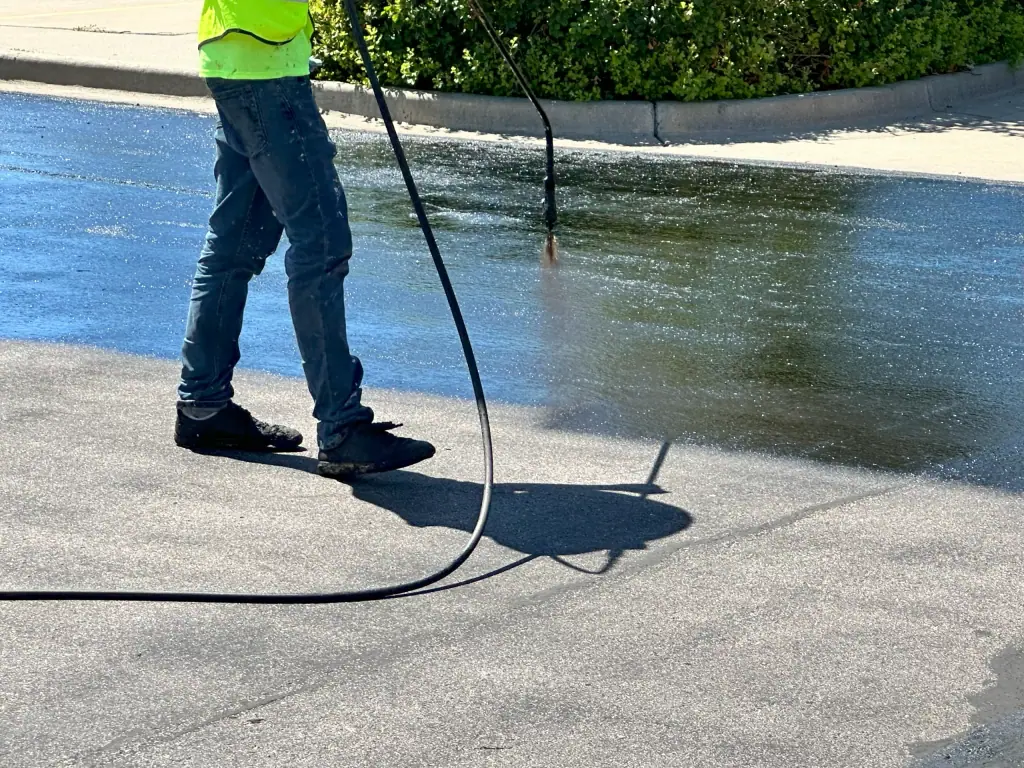
The best time to sealcoat an asphalt driveway is late spring through early fall, when air and pavement temperatures stay reliably between 50°F and 90°F. When during the year is it best to sealcoat an asphalt driveway, the short answer for most Colorado homeowners is May through September. Sealcoat needs at least 24 to 48 hours of dry weather after application to cure properly. In Palmer Lake, CO, the elevation sits at about 7,000 feet, which makes the warm, dry window shorter than in lower-elevation cities like Colorado Springs or Denver. Overnight temperatures drop fast at elevation, and afternoon thunderstorms arrive quickly in midsummer. Avoid sealcoating in winter, during early spring freezes, or during rainy stretches. Moisture or cold temperatures stop the sealcoat from bonding and cause peeling or cracking within weeks. We see that outcome more than we'd like to, and it's almost always avoidable.
What Temperature Is Needed To Sealcoat A Driveway?
Sealcoat requires air and pavement temperatures of at least 50°F, with no rain expected for 24 to 48 hours after application. Most manufacturers set a minimum surface temperature of 50°F and a maximum of around 90°F for proper adhesion. Staying inside that range gives the product enough time to bond without drying unevenly.
Cold temperatures slow the chemical curing process. Sealcoat applied below 50°F often cracks or peels before it fully sets. Very high heat above 90°F creates the opposite problem: the material dries too fast and leaves streaks or thin spots across the surface. Neither end of that range does the driveway any favors.
Plan sealcoating jobs for morning hours when temperatures are rising. Avoid the evening when temperatures are falling, even if daytime readings looked fine. That's not a minor detail. It's one of the most common timing mistakes we see.
Does Pavement Temperature Differ From Air Temperature?
Yes. Asphalt absorbs and holds heat, so surface temperature often runs 10 to 20 degrees above air temperature on sunny days. A thermometer reading 65°F in the shade may mean the pavement is actually at 80°F or higher. Pavement in shade from trees or a building can run noticeably cooler than a sun-exposed surface nearby. Always check the pavement directly, not just the air temperature. Those two numbers disagree more often than people expect.
| Temperature Condition | Sealcoating: Go or No? |
|---|---|
| Air and pavement above 50°F, no rain 48 hrs | Go |
| Air above 50°F but pavement in heavy shade | Check pavement temp directly |
| Temperatures above 90°F | No — dries too fast |
| Temperatures below 50°F | No — will not cure properly |
| Rain forecast within 24 hours | No — sealcoat will wash off |
| Temperatures rising through the morning | Go |
| Temperatures falling after sunset | No — don't start a new job |
What Months Are Best For Sealcoating In Colorado?
In Colorado, May through September offers the most reliable window for sealcoating asphalt driveways. June, July, and August have the longest stretches of warm, dry days, which gives sealcoat the best chance to cure without interruption.
May and September can both work, but each requires watching forecasts closely. A late-season freeze in May or an early cold snap in September can ruin a freshly applied sealcoat overnight. Palmer Lake sits at roughly 7,000 feet elevation, which means overnight temperatures drop faster there than in Colorado Springs (about 6,200 feet) or Pueblo (about 4,700 feet). That's not an abstraction. We've watched warm afternoons here turn into near-freezing mornings, and uncured sealcoat doesn't survive that.
April sealcoating in the Tri-Lakes area is a gamble not worth taking. Snow and frost events remain common through April at this elevation, and one frozen night can destroy an uncured surface. October through March is generally off-limits for residential sealcoating near Palmer Lake.
Is May Too Early To Sealcoat In The Palmer Lake Area?
May can work in Palmer Lake, but only during warm spells when nighttime temperatures stay above 50°F and no rain appears in the 48-hour forecast. A warm week in mid-May can be a real opportunity. A cold front rolling in overnight will undo the work completely. We'd rather wait a few extra weeks than rush it and have to redo it.
The safest sealcoating months for high-elevation Colorado properties, in order:
- June, long warm days, rising temperatures, lowest frost risk of the season
- July, peak warmth and longest dry windows, though afternoon storms need monitoring
- August, still strong for sealcoating; storm frequency begins to ease late in the month
- September, reliable in early weeks; requires close forecast monitoring after mid-month
- May, possible during extended warm spells, but always check overnight lows before you book
Why Is Summer Often The Ideal Sealcoating Season?
Summer gives asphalt contractors the longest windows of warm, dry weather, which sealcoat needs to bond and cure correctly. The days are longer in June and July, which means more working hours and better drying conditions than in any other season.
Warm pavement opens the asphalt pores slightly. That helps sealcoat penetrate the surface and grip more firmly. The bond formed during warm-weather curing tends to last longer than one formed during a marginal fall or spring application. There's a real difference in how a summer job holds up compared to one squeezed in at the edges of the season.
Homeowners can also plan around summer projects more easily. Weather patterns are more predictable in July than in May or October, which makes scheduling simpler for everyone.
The usable warm-weather window is shorter at Palmer Lake's elevation than in lower-elevation Colorado cities, so reaching out to us early in the season is the practical way to get ahead of that narrower schedule.
Do Afternoon Thunderstorms In Colorado Make Summer Sealcoating Risky?
Afternoon thunderstorms can create real problems for sealcoating jobs in July and August. Colorado's Front Range and mountain communities see frequent storms roll in by mid-afternoon during peak summer. A job started at noon can be sitting in a downpour by 2:00 p.m. If you've spent a summer in the Tri-Lakes area, you know exactly how fast that changes.
The solution is straightforward. Start sealcoating jobs early in the morning. An early start gives the product several hours to begin curing before afternoon storm activity builds. We monitor radar and plan around storm windows for exactly this reason.
Can You Sealcoat A Driveway In The Fall?
Yes, early fall sealcoating can work as long as temperatures stay above 50°F during and after application. September is often a reliable month in lower-elevation Colorado areas. Palmer Lake's altitude means colder nights arrive sooner than in Denver or the Front Range foothills.
Early October is the practical cutoff for most high-elevation Colorado properties. Frost risk rises sharply after the first week of October at 7,000 feet, and a single below-freezing night on uncured sealcoat causes the product to crack and fail. That's not a risk worth taking this close to winter.
Fall sealcoating does offer one real benefit: it protects the driveway surface before winter freeze-thaw cycles begin. Water seeps into untreated asphalt, freezes, expands, and widens cracks over the winter. That's the damage nobody notices until spring, and by then it's already done. A properly cured fall sealcoat slows that process significantly.
Fall appointments are sometimes easier to book because the peak summer rush has slowed. If temperatures cooperate, early September can be an excellent time to get the job done.
Should You Sealcoat Before Winter To Protect Against Snow And Ice?
Yes. A properly cured fall sealcoat creates a barrier that slows water intrusion into the asphalt surface. Water that can't penetrate the pavement can't freeze inside it. Freeze-thaw expansion is one of the main causes of alligator cracking and pothole formation in Colorado driveways. Applying sealcoat before the first hard freeze gives the surface meaningful protection through the winter months.
The key word is "cured." A sealcoat that hasn't had 24 to 48 hours of dry, warm weather to set won't provide that protection. Always check a 72-hour forecast before scheduling any fall sealcoating job. We do, every time.
What Weather Conditions Ruin A Sealcoat Job?
Rain, freezing temperatures, high humidity, and strong wind can all prevent sealcoat from bonding and curing properly. Each one interferes with the curing process differently, and some combinations compound the damage.
Rain within 24 to 48 hours of application is the most common failure point. Water hits the fresh surface before the product sets and washes the sealcoat away or dilutes the bond. The driveway may look coated but will flake off within weeks. We'd rather reschedule than let that happen.
High humidity above 90 percent traps moisture underneath the sealcoat surface. The product appears to dry on top but stays wet beneath, which weakens adhesion over time. Strong direct wind dries the surface unevenly and leaves streaks and thin patches where coverage is inconsistent.
Shade from trees or buildings can keep pavement cold even on a warm day. A shaded section may sit below 50°F while a sunny section reads 75°F. Factor pavement shade into the timing before scheduling. It's a detail that's easy to overlook and expensive to ignore.
Five weather conditions that should push a sealcoating job to another day:
- Rain forecast within 24 to 48 hours — the sealcoat won't cure before rain arrives
- Air or pavement temperature below 50°F — curing slows and cracking follows
- Humidity above 90 percent — moisture trapped under the surface weakens the bond
- Strong or gusty wind — causes uneven drying and streaking across the surface
- Heavy shade covering most of the driveway — keeps pavement too cold even when air temps look fine
How Long After Rain Can You Sealcoat An Asphalt Driveway?
Wait until the pavement surface is fully dry and has had time to warm back up. In most cases, that means 24 to 48 hours after rain stops, depending on how much sun the driveway gets and how warm the air temperature is. A shaded driveway after a heavy summer storm may need the full 48 hours. A sun-exposed driveway after a light afternoon shower in warm weather may be ready in 24 hours. The test is simple: the pavement should be dry to the touch and visibly free of standing moisture before any sealcoat goes down. If there's any doubt, wait.
How Often Should You Sealcoat An Asphalt Driveway?
Most asphalt driveways should be sealcoated every two to three years, depending on traffic, sun exposure, and local climate. Colorado's strong UV radiation and freeze-thaw cycles wear sealcoat faster than in milder climates, so the shorter end of that range often applies in the Tri-Lakes area.
New asphalt should cure for at least six to twelve months before the first sealcoat is applied. Sealing too soon traps gases that are still off-gassing from fresh asphalt and prevents proper bonding.
Over-sealcoating is a real failure mode that homeowners sometimes overlook. Applying too many coats too frequently causes product buildup, and that buildup eventually flakes and cracks, leaving a rough, unstable surface that costs more to repair than a properly maintained driveway. More isn't better here. It's actually worse.
Driveways carrying heavier vehicle loads or sitting in full sun all day may wear faster and need sealcoating closer to every two years. Driveways in partial shade with lighter use may last the full three years between applications.
How Do You Know When A Driveway Needs To Be Sealcoated Again?
If water no longer beads on the surface and the pavement looks gray or faded instead of black, it's time to schedule a new sealcoat. A healthy sealcoated surface repels water visibly, the way a waxed car sheds rain. Other signs include small surface cracks forming across the pavement, a rough or sandy texture where the surface once felt smooth, and fading color that makes the driveway look closer to gravel gray than asphalt black. Catching these signs early and sealcoating before cracks grow deeper saves money compared to waiting until crack sealing or patching is also needed. We'd rather you call us at that first sign than after a Colorado winter has had its way with an unprotected surface.
How Does Palmer Lake's Elevation Affect Sealcoating Timing?
Palmer Lake sits at about 7,000 feet elevation, which means shorter warm seasons, faster temperature drops at night, and more UV exposure than lower-elevation Colorado cities. Each of those factors directly affects when sealcoating is practical and how long a sealcoat lasts once applied.
Higher elevation means stronger UV radiation reaches the pavement surface. UV breaks down untreated asphalt faster at altitude than at sea level, which makes regular sealcoating more important in mountain communities than on the plains. A driveway in Palmer Lake that goes three or four years without sealcoating may show surface degradation that a comparable Denver driveway wouldn't yet show. That's just the reality of working at elevation.
Nights cool quickly at 7,000 feet. A warm afternoon in June can be followed by temperatures near freezing by early morning. That rapid swing is a serious risk for sealcoat jobs started late in the day or finished close to sunset. The product needs hours of warmth to begin curing, and a cold night interrupts that process. No exceptions.
The usable sealcoating window in Palmer Lake is narrower than in Colorado Springs (about 6,200 feet) or Pueblo (about 4,700 feet). Mountain afternoon thunderstorms also arrive more frequently and with more intensity near Palmer Lake than on the eastern plains.
Colorado State University Extension publishes Colorado frost date and climate data by elevation and location. Homeowners and property managers in the Tri-Lakes area can use that resource to identify their average last spring frost and first fall frost dates when planning a sealcoating schedule.
Because the warm-weather sealcoating window is shorter at Palmer Lake's elevation than in lower-elevation Colorado cities, planning ahead and contacting us early in the season is the practical way to work within that narrower window.
The Bottom Line
The best sealcoating window in Palmer Lake, CO is May through September, with June through August being the most reliable months for high-elevation properties. Temperature, humidity, and a dry 48-hour forecast window matter more than the calendar date alone. Sealcoating every two to three years at the right time of year protects asphalt from Colorado's UV exposure, freeze-thaw cycles, and moisture damage. When you're ready to schedule, explore asphalt contractor services in Palmer Lake to learn about professional sealcoating, crack sealing, and full driveway paving options in the Tri-Lakes area.
Ready to protect your driveway? Paul's Asphalt Service is a trusted asphalt contractor in Palmer Lake that schedules sealcoating around the weather. Call (719) 232-1523.