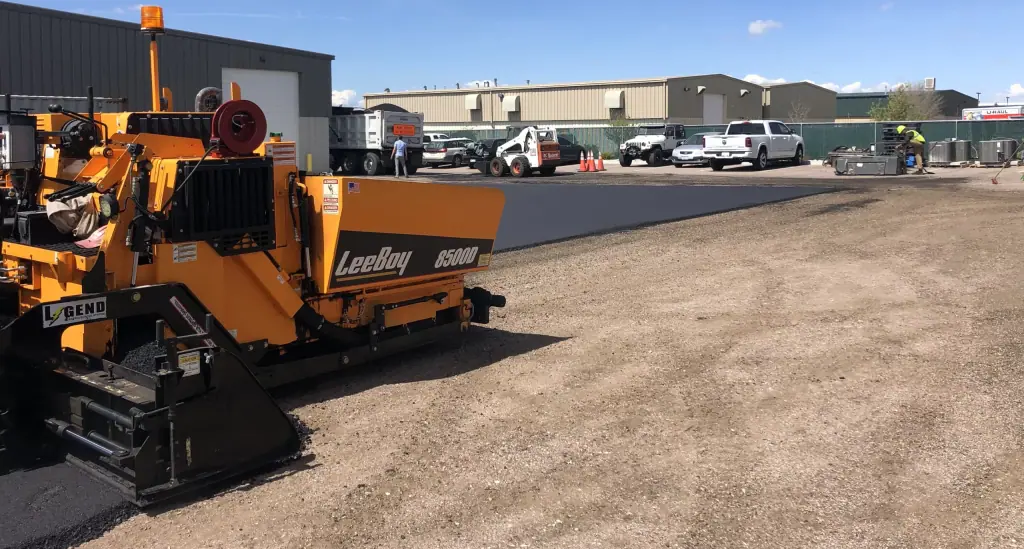
Apartment complex parking lot paving in Palmer Lake keeps multi-unit properties safe and attractive through every season. Paul’s Asphalt Paving handles full lot paving, resurfacing, base repair, and striping for residential properties across Palmer Lake. Colorado’s freeze-thaw cycles are hard on pavement, and surfaces need to be built to hold up under those conditions. We see what those cycles do every spring, and it’s not subtle. Apartment lots are one part of our full range of parking lot paving in Palmer Lake CO, and the same crews that handle new asphalt parking lot paving build your community’s lot to last.
Signs Your Palmer Lake Apartment Parking Lot Needs Paving Now
Property managers in Palmer Lake often first notice pavement problems through tenant safety complaints or visible surface damage. Catching problems early prevents base failure and keeps repair costs from growing. Honestly, the earlier you catch it, the better your options look.
Here’s what to look for:
- Alligator cracking across driving lanes or stalls
- Potholes larger than a fist
- Water pooling near building entries after rain or snowmelt
- Crumbling edges along parking stalls, which signal base layer problems rather than surface wear alone
Palmer Lake’s elevation creates frequent freeze-thaw cycles that speed up surface cracking faster than lower-elevation properties see. Faded or missing line striping is a separate trigger worth addressing during repaving to meet ADA layout requirements at the same time. For the cracks and low spots that show up between bigger projects, we also offer ongoing parking lot repair and maintenance to keep small problems from spreading.
How to Choose Between Asphalt Resurfacing and Full Replacement for Apartment Lots
Property managers and HOA decision-makers comparing repair options face one core question: how deep does the damage go? Resurfacing works when the base layer is still stable and cracking stays at the surface level only.
Full replacement is the right call when cracking has reached the base or when drainage is failing across the lot. Some older apartment lots were installed before modern base standards were common. A core sample test tells you which option your lot actually needs, and choosing the right method the first time avoids repeat work within a few seasons. Sometimes resurfacing is the smart move, and sometimes it’s throwing money at a problem that won’t hold. We’d rather tell you which is which upfront. When the base is still solid, parking lot resurfacing is the cost-effective choice.
Preparing an Apartment Complex Parking Lot for Paving in Palmer Lake
Parking lot preparation is the stage that determines how long the finished surface lasts. Property managers coordinating tenant notice and site access play a direct role in keeping this phase on schedule.
Prep work covers removing old asphalt down to the sub-base, grading the sub-base to direct water away from building foundations and parking stalls, and compacting aggregate base course to a uniform depth.
Soil conditions in Palmer Lake can vary across a property. Areas with unstable or clay-heavy soil need extra base compaction to prevent settling after the lot opens. Plan tenant parking alternatives before crews arrive, because full lot access is needed throughout the prep phase. That coordination is on you, and it matters more than most property managers expect. And if your community is adding units or tenants, we can pair base work with asphalt parking lot expansion to add stalls on the same site.
The Apartment Complex Parking Lot Paving Process Step by Step
Paving day at a Palmer Lake apartment complex follows a set sequence that property managers can plan tenant communication around. Knowing each step helps you set accurate timelines for lot reopening.
Crews deliver and spread hot-mix asphalt to the specified depth for commercial lot use. Roller compaction then runs in multiple passes to build even density across the full surface. Cure time runs 24 to 48 hours before the lot opens to vehicle traffic.
Palmer Lake’s paving season runs best from late spring through early fall. Cold temperatures slow asphalt cure and affect compaction quality, so scheduling within that window matters for the finished result. We won’t rush that process to hit a deadline.
Striping and ADA Compliance After Parking Lot Paving in Palmer Lake
Fresh pavement at a Palmer Lake apartment complex requires new striping before tenants can safely use the lot. Property managers responsible for code compliance should plan striping as part of the paving project rather than a separate phase. It’s much easier to handle it all at once, and it keeps you from reopening a lot that technically isn’t compliant yet.
New striping covers stall layout and numbering, fire lane markings, and ADA accessible space dimensions, cross-slope limits, and connected pathways to building entries. Local permitting authorities may require updated striping plans for repaved lots depending on project scope. Checking with El Paso County before work begins helps confirm what documentation the project requires. We handle parking lot striping and full ADA parking lot compliance so stalls, fire lanes, and accessible spaces meet code, and we can add asphalt speed bump installation to slow traffic near building entries.
Ongoing Maintenance That Protects Your Palmer Lake Apartment Lot After Paving
A finished parking lot at a Palmer Lake apartment complex needs a seasonal maintenance plan to hold its value. Property managers who schedule routine care avoid the larger repair costs that come from letting small problems sit.
Seal coat every two to three years slows oxidation and water penetration. Crack sealing after each winter season, before small cracks spread to the base layer, is the other task we’d put at the top of any maintenance schedule. Don’t wait until you can see the problem from the office window.
Palmer Lake’s snow removal season is hard on pavement edges. Plow blades can leave edge damage along stalls and drive lanes that shows up clearly each spring. A lot walk-through after winter catches that damage while repairs are still minor.
Other commercial paving we handle in Palmer Lake
Apartment communities are one part of the commercial work we take on across the Front Range. We also handle retail parking lot paving for shopping centers, plus warehouse asphalt paving, loading dock paving, and industrial asphalt paving for freight and manufacturing sites. For institutional lots, we take on church parking lot paving and school parking lot paving built for steady daily use.
Frequently Asked Questions
How long does apartment parking lot paving take in Palmer Lake?
The timeline for paving a mid-size apartment parking lot in Palmer Lake depends on lot size, base condition, and weather. Palmer Lake’s usable paving season is shorter than lower-elevation areas, so scheduling during the late spring through early fall window keeps weather delays low. Base repair work adds time before paving begins. Property managers should discuss a realistic project timeline with their contractor based on site-specific conditions. We’d rather give you an honest schedule than a fast one that doesn’t hold.
What time of year is best to pave a parking lot in Palmer Lake CO?
Late spring through early fall is the best time to pave a parking lot in Palmer Lake, Colorado, because temperatures must stay above 50 degrees Fahrenheit for proper asphalt compaction and cure. Below that threshold, hot-mix asphalt cools too quickly and compaction quality drops. Palmer Lake’s elevation means fall temperatures drop faster than in Colorado Springs or Pueblo. Schedule before September and you reduce the risk of cold-weather complications considerably.
Does an apartment parking lot need a permit for paving in El Paso County?
Permit requirements for apartment parking lot paving in El Paso County vary by project scope, and large repaving projects or drainage changes often require a county grading or improvement permit. Smaller overlay projects can fall below the permit threshold, but that depends on lot size and site conditions. Property managers should check with El Paso County before work begins to confirm what documentation the project requires. Don’t assume either way.
How do I keep tenants safe during parking lot paving at my Palmer Lake apartment?
Tenant safety during parking lot paving at a Palmer Lake apartment property is best managed through advance written notice before crews arrive. Arranging temporary off-site parking gives tenants a clear alternative while the lot is closed. Barriers around fresh asphalt keep foot traffic off curing surfaces. Clear signage at building entries directing tenants to the temporary parking area reduces confusion during the project.
Can asphalt resurfacing fix a damaged apartment parking lot instead of full replacement?
Asphalt resurfacing can fix a damaged apartment parking lot when the base layer is still structurally intact, because resurfacing adds a new top layer without full excavation. Surface-level cracking that has not reached the base is a good candidate for this approach. A core sample test of the existing pavement confirms whether the base is stable enough for resurfacing to hold long-term. If the base has failed, full replacement is the only option that prevents the problem from returning. No exceptions.
How soon can tenants drive on a freshly paved parking lot in Palmer Lake?
Tenants can typically drive on a freshly paved parking lot in Palmer Lake after 24 to 48 hours under standard conditions. Cooler fall temperatures slow the cure process, and longer wait times are recommended when paving happens later in the season. Heavy vehicles like moving trucks or service vehicles should wait longer than personal cars. Property managers should communicate the reopening time clearly so tenants don’t drive on the surface before it’s ready.