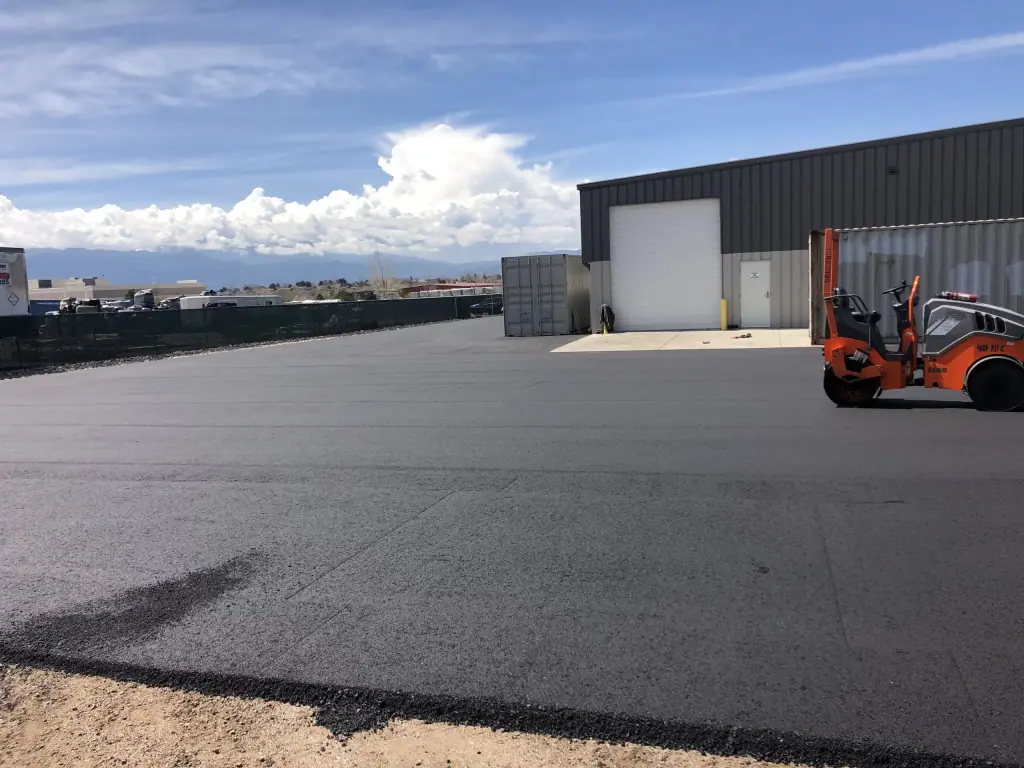
In Palmer Lake, loading dock paving keeps freight operations safe and moving. Paul’s Asphalt Service LLC handles new dock apron paving, resurfacing worn dock pads, and edge repair for commercial properties. If your dock surface is cracking, rutting, or collecting water, we can tell you what it actually needs. Loading dock work is one part of our full range of parking lot paving in Palmer Lake CO, and the same crews that handle new asphalt parking lot paving build your dock pad to carry heavy freight.
Signs your loading dock apron needs paving repair
Palmer Lake warehouse and distribution facility managers should watch for cracking, rutting, or low spots that collect water near dock edges. These are early signs of base stress. Catching them early prevents costly base failure and truck damage. Colorado’s freeze-thaw cycles in Palmer Lake push water into small cracks and widen them fast. Surface damage that looks minor in fall can become a serious problem by spring. We see it every year, and it’s almost always cheaper to fix in October than in April. For the cracks and low spots that show up between bigger projects, we also offer ongoing parking lot repair and maintenance to keep small problems from spreading.
How to choose the right asphalt thickness for a loading dock pad
Asphalt thickness on a loading dock pad determines whether the surface holds up under heavy truck axle loads or begins to sink. Specify thickness before construction begins, not after problems appear.
Typical dock pads require thicker asphalt layers and a compacted aggregate base beneath them. Palmer Lake’s soils make base preparation a critical step before any asphalt goes down, or the surface may shift over time. There’s no honest way to give you a number before we’ve looked at the site. An on-site evaluation is the only reliable way to confirm what your specific pad needs.
Site preparation steps before loading dock paving begins
Good site prep is what separates asphalt that lasts from asphalt that fails early. Commercial property managers coordinating paving schedules should plan for demolition of the old surface, grading, base compaction, and drainage checks before any new material goes down. Proper grading and base compaction make asphalt last years longer than a job that skipped those steps to save time.
In Palmer Lake, base work needs dry, frost-free conditions. Scheduling around the season matters. That part isn’t flexible. And if your freight volume is growing, we can pair base work with asphalt parking lot expansion to add dock positions or truck lanes on the same site.
The loading dock asphalt paving process from start to finish
Loading dock paving in Palmer Lake follows a defined sequence. The process includes removing the old surface, grading the base, laying a binder course (a lower asphalt layer that carries structural load), applying the top course, compacting both layers, and allowing proper cure time.
Knowing this sequence helps Palmer Lake business owners schedule truck traffic around the work and avoid surface damage before curing is complete. At this altitude, asphalt cools faster than it does at lower elevations, so our crew manages compaction timing accordingly. It’s one of those things that looks straightforward on paper but takes real local experience to get right. Once the pad is down, we can add parking lot striping and ADA parking lot compliance markings for dock lanes and accessible spaces, plus asphalt speed bump installation to control truck traffic around the docks.
How to verify quality after loading dock paving is complete
Property managers doing post-project walkthroughs should check for smooth transitions between new and existing pavement, proper slope for drainage away from the dock, and consistent surface compaction across the pad. A surface inspection before the first freeze can catch early issues while repairs are still straightforward. Any low spots or uneven edges found now are far less expensive to address than base failures found later.
Palmer Lake weather can shift fast. We’d rather you call us about a small edge issue in October than deal with a failed base section in April.
Preventive maintenance that extends loading dock pavement life
Crack sealing and seal coating are the two maintenance services we recommend most to Palmer Lake facility managers working with a long-term paving budget. As the Federal Highway Administration’s pavement preservation guidance notes, filling cracks early stops water from reaching the base layer, and seal coating periodically slows surface oxidation. Palmer Lake’s UV exposure and cold winters accelerate asphalt binder breakdown compared to milder climates, so the elevation here makes a consistent maintenance schedule more important than it would be somewhere like Colorado Springs or Pueblo. Honestly, we find that a lot of facilities wait too long between inspections and end up with base repairs that a little crack sealing would have prevented. When the surface wears but the base still holds, parking lot resurfacing restores it at lower cost than a full rebuild. Call us before it gets to that point.
Other commercial paving we handle in Palmer Lake
Loading docks are one part of the commercial work we take on across the Front Range. We also handle warehouse asphalt paving and industrial asphalt paving for freight and manufacturing sites, plus retail parking lot paving for shopping centers and apartment complex parking lot paving for multi-family communities. For institutional lots, we take on church parking lot paving and school parking lot paving built for steady daily use.
Frequently asked questions about loading dock paving in Palmer Lake CO
How long does loading dock paving take in Palmer Lake CO?
Project timelines for loading dock apron work in Palmer Lake vary depending on the size of the dock area, the condition of the existing base, and whether drainage corrections are needed. Scheduling the work during a dry stretch of weather helps keep the timeline on track.
What asphalt thickness does a loading dock pad need in Palmer Lake?
The appropriate asphalt thickness for a loading dock pad depends on expected truck load weights, existing soil conditions, and base depth. Heavier traffic or poor soil conditions typically require greater base depth. An on-site evaluation is the most reliable way to determine what your specific dock pad needs.
Can loading dock paving be done in Colorado winter weather?
Loading dock paving in Colorado requires adequate ground and air temperatures for proper asphalt compaction, which makes spring through early fall the preferred window in Palmer Lake. Cold ground causes asphalt to cool too quickly, making proper compaction difficult to achieve. Scheduling your project outside of the winter months protects the quality of the finished surface.
How do I schedule a loading dock paving assessment in Palmer Lake CO?
Contact Paul’s Asphalt Service LLC to discuss your loading dock paving needs in Palmer Lake. An on-site visit is the only reliable way to evaluate base condition, drainage patterns, and surface damage to determine what your dock pad actually needs.
Does loading dock paving require permits in Palmer Lake CO?
Commercial paving projects in Palmer Lake may require a local permit depending on the scope of work. Confirming permit requirements with the relevant local and county authorities before work begins keeps your project on schedule and avoids delays once the crew is on site.
How often should a loading dock apron be resealed in Palmer Lake?
How often a loading dock apron should be resealed depends on traffic volume and site exposure to sun and freeze-thaw cycles. Higher-traffic docks and surfaces with full sun exposure typically need attention more frequently. Regular resealing slows surface oxidation and extends the time before full repaving is needed.