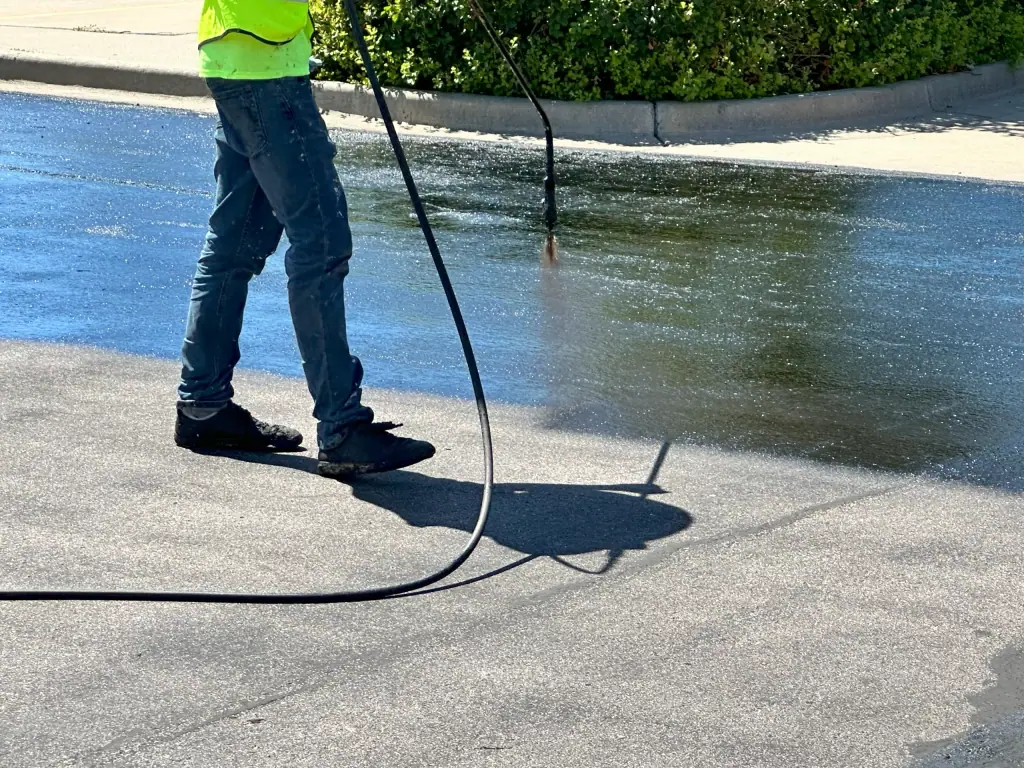
Palmer Lake’s freeze-thaw cycles split asphalt fast, and parking lot crack sealing in Palmer Lake CO addresses this directly before damage spreads. This page covers what crack sealing is, who needs it, and when to schedule it. For properties that need more than preventive maintenance, our commercial parking lot paving services and asphalt parking lot paving cover full installations and larger reconstruction projects. Our asphalt paving contractor team works with HOA lots, commercial properties, and shared parking areas throughout the area. Paul’s Asphalt Service LLC is an asphalt contractor serving El Paso County, and the next steps are simple.
How to Know Your Palmer Lake Parking Lot Needs Crack Sealing Now
Property managers and HOA boards in Palmer Lake often spot surface damage before they know what to do about it. The clearest signs are cracks wider than a quarter-inch, spiderwebbing near lot edges, and water pooling along crack lines. Properties along the Monument Valley Highway 105 corridor see regular vehicle traffic that can widen cracks over time. Catching cracks early stops water from reaching the base layer and turning a small repair into a large one. When cracking is widespread, a parking lot repair and maintenance assessment can determine whether targeted repairs are still appropriate or whether parking lot resurfacing is the better next step. Honestly, one visit from our crew tells you more than any checklist — we can tell you on the spot whether sealing or patching is the right call.
Why Palmer Lake’s Climate Makes Crack Sealing a Must-Do Each Year
Palmer Lake sits above 7,000 feet. At that elevation, freeze-thaw cycles are frequent throughout the winter season. Water enters open cracks, freezes, expands, and forces those cracks wider with every winter that passes. HOA decision-makers and commercial lot owners in Palmer Lake feel this damage add up season after season. It’s not dramatic. It’s just steady, and it doesn’t stop on its own.
Spring snowmelt on lakeside and downtown Palmer Lake lots adds extra moisture stress on top of that winter damage. Pairing crack sealing with parking lot sealcoating adds a protective surface layer after the cracks have been treated. Lots that skip sealing for even one season tend to show it the following spring. Regular crack sealing breaks this cycle and extends pavement life.
The Right Time of Year to Schedule Parking Lot Crack Sealing in Palmer Lake
Property managers in Woodmoor and Gleneagle HOA communities planning parking lot maintenance budgets should target late spring through early fall for crack sealing work. Pavement surface temperatures need to stay above 50 degrees Fahrenheit for sealant to bond — consistent with Federal Highway Administration pavement preservation guidance. Crack filler applied to wet asphalt or asphalt below 40 degrees won’t cure and can fail before the first frost.
Palmer Lake’s warm season is short. We’d rather you book early than call us in August when our calendar’s already packed through September. Sealant that cures fully before the next freeze cycle is sealant that actually holds.
What Happens During a Parking Lot Crack Sealing Job in Palmer Lake
Paul’s Asphalt Service LLC prepares each crack before any sealant is placed. Cracks are cleaned to remove loose debris, vegetation, and moisture prior to application. Hot-pour or cold-applied rubberized sealant is then placed directly into each cleaned crack and worked level with the surrounding pavement surface.
Preparation is what separates sealant that holds through a Palmer Lake winter from sealant that lifts by December. We don’t skip that step to move faster. Not on any job.
Crack Sealing for Different Palmer Lake Parking Lots
The way cracks develop depends on traffic and property use. Retail parking lot paving surfaces experience frequent turning and braking near entrances, while apartment complex parking lot paving must accommodate steady resident and service traffic. Crack sealing helps protect both types of lots between larger paving cycles.
Heavy-use sites place different demands on asphalt. Loading dock paving, warehouse asphalt paving, and industrial asphalt paving areas often carry trucks or equipment, so cracks should be addressed before water weakens the pavement below.
Community properties also benefit from planned inspections. Church parking lot paving and school parking lot paving surfaces can be inspected and sealed during lower-traffic periods to limit disruption.
How to Prepare Your Palmer Lake Parking Lot Before the Crew Arrives
Property managers at Baptist Road commercial area properties and town center lots can take a few steps before our crew arrives to keep the job moving. Clear all vehicles from the work zone before the scheduled start time. Mark any drainage inlets or utility covers so the crew can protect them during the application.
If other improvements are planned, the same closure window can also be used to coordinate parking lot striping, review ADA parking lot compliance, or plan asphalt speed bump installation without creating repeated disruptions. Properties running short on spaces can also use the inspection period to evaluate an asphalt parking lot expansion before maintenance work is scheduled.
Palmer Lake’s afternoon weather can affect curing, so morning start times give the sealant better conditions to set before temperatures shift. A cleared, dry lot means we finish efficiently and you reopen sooner.
How to Verify Crack Sealing Work Is Done Correctly on Your Palmer Lake Lot
HOA board members and facility managers doing a post-job walk-through should check that sealant sits flush with the pavement surface throughout the lot. Raised ridges along sealed cracks trap ice and debris in winter, and that creates new surface problems you didn’t start with. Look along all crack edges for gaps or missed sections before signing off on the work.
Woodmoor HOA private roads often have curb-line cracks that are easy to overlook during application. A quick walk-through right after curing catches any touch-up needs while the crew is still on-site. We’d rather fix a missed section before we load up than have you call us back a week later.
Preventing Future Parking Lot Cracks in Palmer Lake After Sealing Is Complete
Property managers building a long-term asphalt maintenance plan in Palmer Lake should treat crack sealing as one layer of a broader schedule. Pairing it with periodic sealcoating and planned patching keeps costs predictable and avoids the kind of deferred damage that turns a maintenance budget line into a capital expense.
Schedule a visual inspection each spring after snowmelt has cleared from the lot so new cracks are caught before they grow. Palmer Lake’s winter traction materials wear sealed surfaces over time, so a post-winter walk is worth adding to the annual routine alongside the spring check. Small cracks addressed in April don’t become expensive repairs in October.
Frequently Asked Questions
How soon can I reopen my Palmer Lake parking lot after crack sealing?
Hot-pour sealants typically cure within 30 to 60 minutes under warm, dry conditions. Palmer Lake’s elevation and afternoon shade can affect curing times, so scheduling work in the morning gives the sealant the best opportunity to set before shade moves across the lot. We’ll give you a reopen estimate based on conditions on the day of the job.
Does crack sealing work on parking lots with heavy truck traffic in Palmer Lake?
Flexible rubberized sealant is designed to handle vehicle load movement, including truck traffic on commercial lots. It compresses and expands with the pavement rather than cracking under repeated load. Lots with heavy use benefit from thorough crack preparation before sealant goes down. On high-traffic surfaces, prep work is what makes the sealant last, and we don’t cut that step short.
How often should an HOA parking lot in Palmer Lake be crack sealed?
Many pavement professionals recommend annual or every-other-year crack sealing for HOA parking lots, and Palmer Lake’s frequent freeze-thaw cycles mean yearly inspection and spot sealing is often appropriate. A yearly spring inspection lets boards identify which sections need sealing before summer budgets close. Catching reopened cracks early keeps treatment costs lower from year to year.
Can parking lot crack sealing be done in the fall in Palmer Lake?
Early fall crack sealing works in Palmer Lake as long as pavement temperatures stay above 50 degrees Fahrenheit during application. Once nighttime temperatures drop consistently below 40 degrees, sealant won’t bond and scheduling should wait until spring. The fall window in Palmer Lake is shorter than in lower-elevation parts of El Paso County, so early booking matters. Property managers who miss the fall window should plan for a spring start as soon as pavement temps recover.
What crack sizes can be sealed in a Palmer Lake parking lot?
Cracks from hairline width up to about three-quarters of an inch wide are generally good candidates for crack sealing in a Palmer Lake parking lot. Wider gaps typically require more extensive repair methods before sealant will hold, and attempting to seal an oversized crack without addressing the underlying issue leads to early sealant failure. A site assessment identifies which cracks fall into each category before any material is placed.
Do Palmer Lake commercial properties need a permit for parking lot crack sealing?
Routine crack sealing is generally considered maintenance work. Commercial property owners and HOA boards should contact the Town of Palmer Lake directly to confirm whether any specific project requires a permit, particularly if the work involves significant surface removal or grade changes.